Indian wedding AI photo prompts: haldi, mehendi, sangeet and pre-wedding portraits
Published
Short answerUpload one clear photo, tell the AI to keep every face exactly the same, then describe one ceremony: the outfit, the colours, the setting and the light. For couples, use a photo where both faces are fully visible, and change one detail per try.
An Indian wedding is not one event. It is a haldi in the morning, a mehendi afternoon, a sangeet with music and lights, and often a pre-wedding shoot weeks before. Each one has its own colours and mood, and each one makes a lovely AI portrait.
You don't need a photographer for every idea. You need one good photo and a prompt that says exactly what to change and what to keep. This guide gives you prompts for each ceremony, explains why they work, and shows how to fix the usual problems. The photo prompts work in tools that accept an uploaded picture, such as Gemini and ChatGPT.
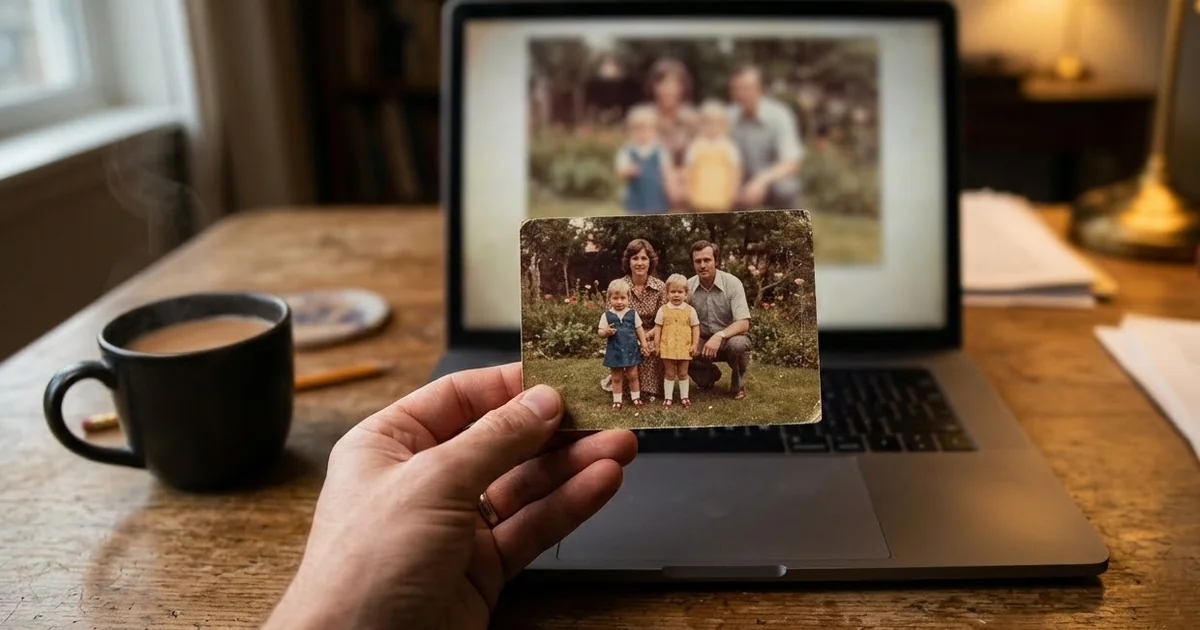
Start with the right photo
The AI can only keep your face if it can see it clearly.
- Face fully visible. No sunglasses, no hair across the eyes, no hand on the chin.
- Even light. Daylight from a window is ideal. Harsh shadows turn into strange features.
- No beauty filter. Filters smooth away the details that make you look like you.
- For couples, both faces in one frame. Neither face should be cropped or turned far away.
Only use photos of yourself, or of people who have agreed to it. That matters even more at a wedding, where there are many guests in the background.
The rule for every wedding prompt
Every prompt below follows the same order:
- What to keep. "Keep my face and features exactly the same." Put this near the start.
- The ceremony. Haldi, mehendi, sangeet or pre-wedding. One per picture.
- The outfit. Colour, fabric and jewellery, the way you would describe it to a tailor.
- The setting and light. Courtyard, stage, garden. Morning sun or evening fairy lights.
- The look. "Natural skin texture", "candid wedding photography", "shallow depth of field".
If you mix two ceremonies in one prompt, such as turmeric on your cheeks at a sangeet stage, you will get a muddle.
Haldi portrait
Haldi is bright, messy and full of laughter. The haldi ceremony portrait prompt captures that:
Turn this photo into a joyful haldi ceremony portrait. Keep my face and features exactly the same.

Bright yellow outfit, fresh marigold garlands, a touch of turmeric on my cheeks, sunlit courtyard with flower decorations, warm laughter, natural colours, candid wedding photography style. Extra instructions: [ANY DETAIL TO KEEP OR AVOID].
Use the extra instructions line for anything personal: "keep my glasses", "add my nose pin", "no turmeric in my hair". Keep the yellows warm and natural. If the whole picture turns orange, add "true-to-life skin tone, only the outfit and flowers are yellow".
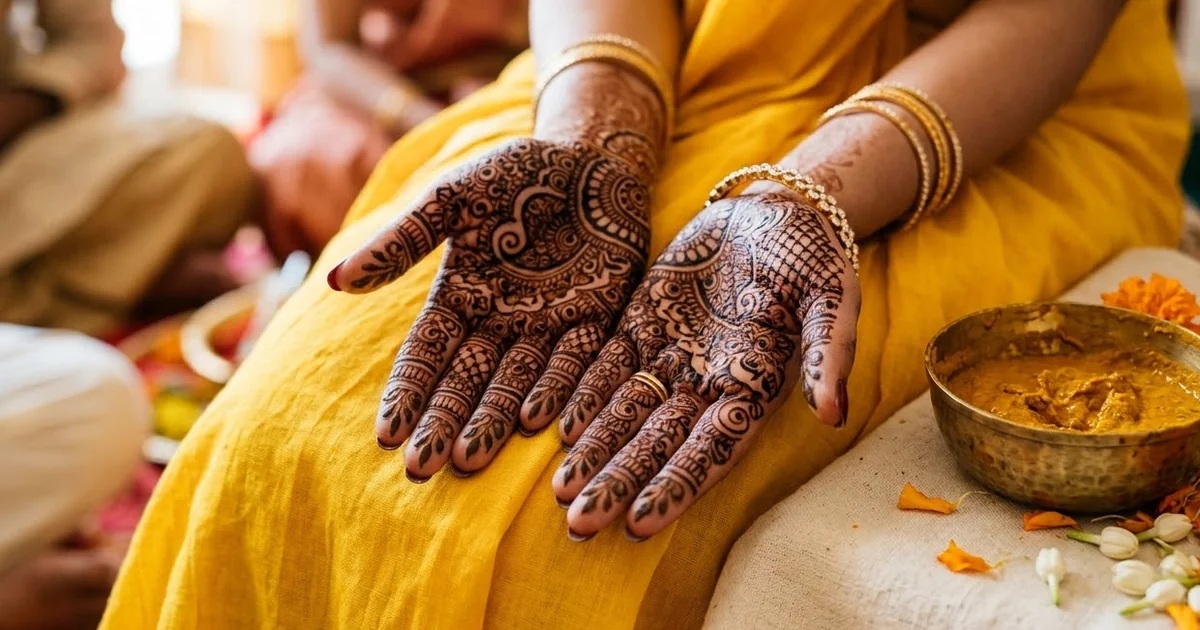
Mehendi close-up
A mehendi picture works best as a close-up of the hands, not a full portrait. The mehendi hands close-up prompt adds a pattern to a photo of your own hands:
Using the hands in this photo, add intricate [BRIDAL / ARABIC / SIMPLE FLORAL] mehendi patterns in deep brown henna on both palms and fingers. Keep the shape and skin tone of the hands exactly the same.

Fine detail, natural henna sheen, soft window light, a few jasmine flowers nearby, close-up photography.
Photograph your hands flat on a plain surface, palms up, fingers slightly apart. A busy background or overlapping fingers makes the pattern land in odd places. If you have a design in mind, name its parts: "a peacock on each palm, fine mesh on the fingers, a mandala in the centre".
Sangeet night portrait
Sangeet is the party. Think stage lights, sparkle and a warm glow. The sangeet night portrait prompt sets that scene:
Turn this photo into a glamorous sangeet night portrait. Keep my face and features exactly the same.

Wear festive [COLOUR] traditional attire with jewellery, in front of a stage decorated with fairy lights and flowers, warm party glow, a joyful smile, shallow depth of field, celebratory wedding photography.
Replace "traditional attire" with the real outfit for a better result: "an emerald sequinned lehenga with a sheer dupatta" or "a navy bandhgala with a pocket square". Night scenes often come out too dark on the face. If that happens, add "soft light on my face from the stage lights".
Pre-wedding couple portrait
For two people, the photo matters even more. The pre-wedding scene prompt turns one couple photo into a cinematic portrait:
Turn this couple photo into a cinematic pre-wedding portrait. Keep both faces, hair and features exactly the same.

Setting: [HILLTOP MEADOW / PALACE GARDEN / BEACH AT SUNSET]. Outfits in coordinated [COLOURS], soft golden light, a gentle romantic pose, shallow depth of field, natural skin texture, editorial wedding photography.
"Coordinated colours" works better than matching outfits, which can look like a uniform. Try "her in dusty rose, him in ivory" or "both in shades of sage green". For a portrait on the wedding day itself, the editorial wedding portrait prompt follows the same pattern with a candlelit courtyard or a beach at dusk.
A save-the-date card
Not every wedding picture needs a face. The save-the-date card prompt creates stationery from text alone:
Elegant save-the-date card for [NAME] and [NAME], [DATE], [CITY]. [MINIMAL / FLORAL / VINTAGE] style, cream paper texture, fine botanical line drawings of [FLOWERS] in the corners, refined serif and script lettering, muted [COLOUR] palette, luxurious stationery look. --ar 5:7
Image tools can still misspell names and dates. Check every letter before you send it to family. If the text keeps going wrong, generate the card without text and add the words in a design app. The --ar 5:7 at the end is a Midjourney setting for the card shape; in Gemini or ChatGPT, write "portrait card, 5:7 shape" instead.
Fixing common problems
The face doesn't look like you. Reply: "Keep my face identical to the original photo. Only change the outfit, background and light." If it still drifts, use a sharper, front-facing photo.
One partner looks right, the other doesn't. Say which one needs fixing: "Keep the person on the left exactly as in the photo." A photo where both faces are the same size helps.
Jewellery looks plastic. Ask for "real gold with natural shine and fine detail" or "oxidised silver", and remove words like "glamorous" or "fantasy".
Skin looks airbrushed. Add "natural skin texture, real photo" and remove "flawless" or "perfect skin".
Too much going on. Remove one element. Garlands, lights, flowers, jewellery and a crowd all compete for attention.
Change one thing per try so you can see what helped. Our guide to editing a prompt explains this routine.
Quick checklist
- One sharp, well-lit, unfiltered photo, with every face fully visible.
- "Keep my face exactly the same" near the start.
- One ceremony per picture.
- Describe the outfit like a tailor would: colour, fabric, jewellery.
- Add the setting, the light and "natural skin texture".
- Check names and dates on any card before you share it.
- Only use photos of people who have agreed to it.
For a toast to go with the pictures, the wedding speech prompt helps you write one. For more festive ideas, see our Navratri garba portrait guide.
Comments
No comments yet. Be the first to share what worked for you.