Hosting a dinner party? These AI prompts handle the planning
Published
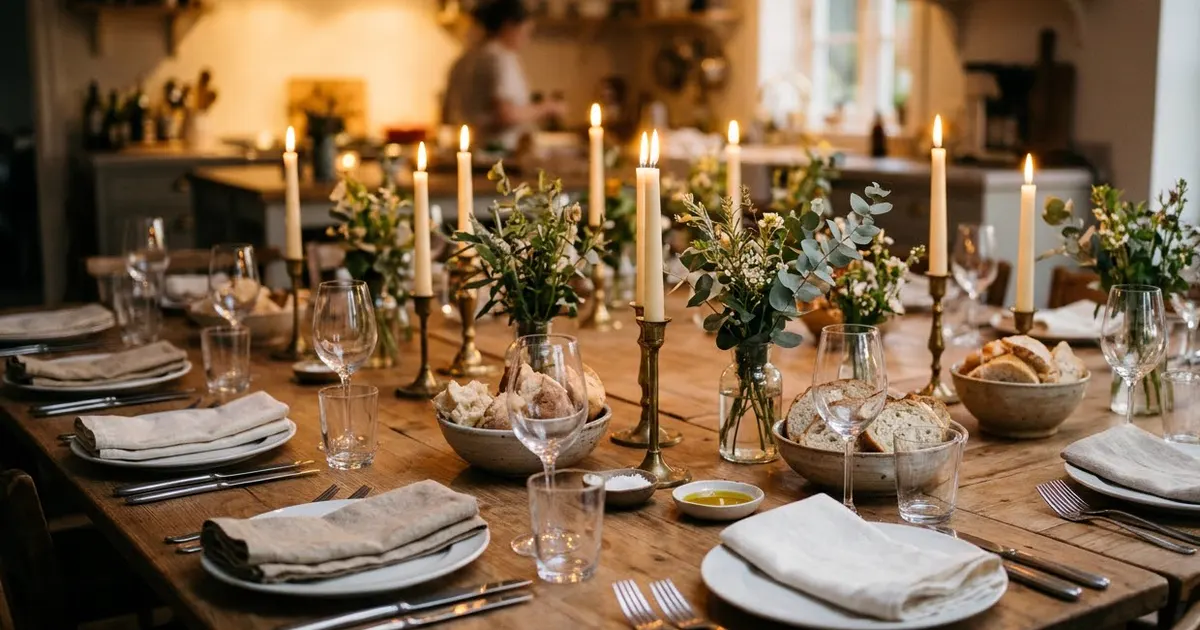
Short answerGive an AI chatbot your guest count, any food issues, and how much cooking time you actually have, then ask for a menu and a timed cooking schedule together. Planning the timing, not just the dishes, is what stops the usual last-minute panic.
Full collectionAI food photo prompts for restaurants and home cooks10 prompts with examples, steps and fixes →The food is rarely the hard part of a dinner party. The hard part is timing: knowing when to start each dish so everything is ready within ten minutes of each other, instead of one course going cold while another is still in the oven. A chatbot is good at exactly this kind of scheduling, as long as you tell it what you're actually cooking and when people arrive.
This guide covers three prompts: the menu, the drinks, and the running order that ties them together.
Build the menu around your constraints, not a random recipe list
Before you ask for recipes, get the shape of the evening right: how many courses, how much of it can be made ahead, and anyone's food issues. The dinner party menu prompt asks for this upfront:
Plan a dinner party menu for [NUMBER] guests.
Occasion: [CASUAL / BIRTHDAY / FESTIVE / NO SPECIFIC OCCASION].
Dietary needs: [LIST ANY, OR "none"].
My cooking skill: [BEGINNER / COMFORTABLE / CONFIDENT].
Oven and hob availability: [E.G. "one oven, two hob rings"].
I want to cook [SOME/MOST/ALL] of it the day before.

Give me a starter, main and dessert. For each, say what can be made ahead and what must be done on the day. Flag anything that needs the oven at the same time as something else.
The oven and hob detail matters more than people expect. A menu that reads well on paper can fall apart if two dishes both need the oven at 200°C for the last 20 minutes and you only have one.
If someone has a food allergy, name it specifically rather than saying "no nuts" after the fact, and ask the model to double-check ingredients it suggests for hidden sources, such as nut oils or cross-contamination risk in shop-bought items.
Match drinks to the menu, not the other way round
Picking wine or drinks after the menu is set, rather than before, usually works better because the food has more constraints than the drink does. The drink pairing prompt takes your finished menu and suggests what goes with it:
Here's my dinner menu:
Starter: [DISH]
Main: [DISH]
Dessert: [DISH]

Suggest a drink for each course, including a non-alcoholic option for each. Keep suggestions available at a normal UK supermarket, and give me a rough budget for [NUMBER] guests, 2 drinks per course.
Asking for a non-alcoholic option alongside each pairing, rather than one single "mocktail" for the whole night, means guests who aren't drinking get a proper match for their course, not an afterthought.
The part that actually prevents the panic: a timed run-of-show
This is the prompt that does the most work. Instead of a list of dishes, ask for a timeline that works backwards from when guests arrive. The event run-of-show prompt does this:
Guests arrive at [TIME]. We're eating [STARTER], [MAIN] and [DESSERT].
[MAIN] needs [X] minutes in the oven at [TEMPERATURE].
[STARTER] takes [X] minutes to plate once people are seated.
I want drinks and snacks ready when guests arrive.

Build a minute-by-minute schedule from 3 hours before arrival to dessert, working backwards from serving times. Tell me exactly when to start each dish.
Giving it the oven time and temperature for your main dish is what makes this useful rather than generic. Once you have the schedule, stick a copy on the fridge rather than only in your phone, so you're not checking your screen with flour-covered hands.
Fixing a bad answer
The timing doesn't add up. If two things are supposed to be ready at once but one takes much longer, say so and ask it to adjust the start times, not the recipe.
Too ambitious for your kitchen. If the plan assumes three hob rings and you have two, say exactly what equipment you have. It will rework the order around that constraint.
Ignores a dietary need. If an allergy or intolerance you mentioned shows up in a later suggestion anyway, point it out directly: "This has [INGREDIENT] in it, which I said to avoid. Suggest an alternative."
Setting the table and the mood
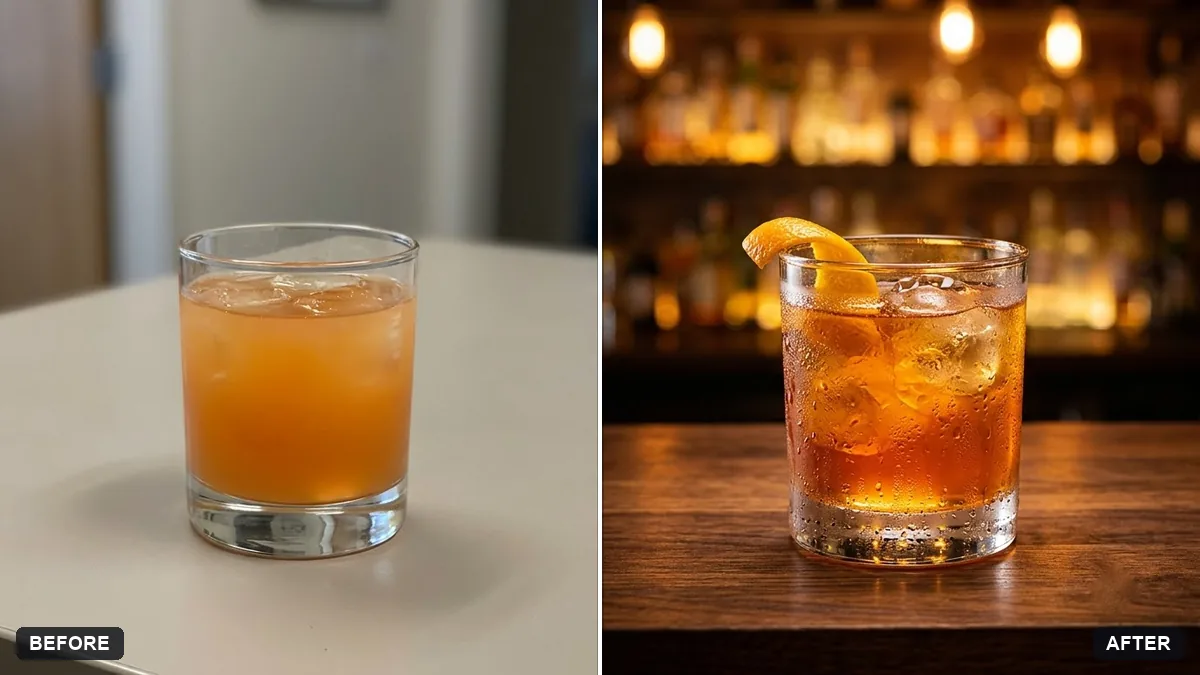
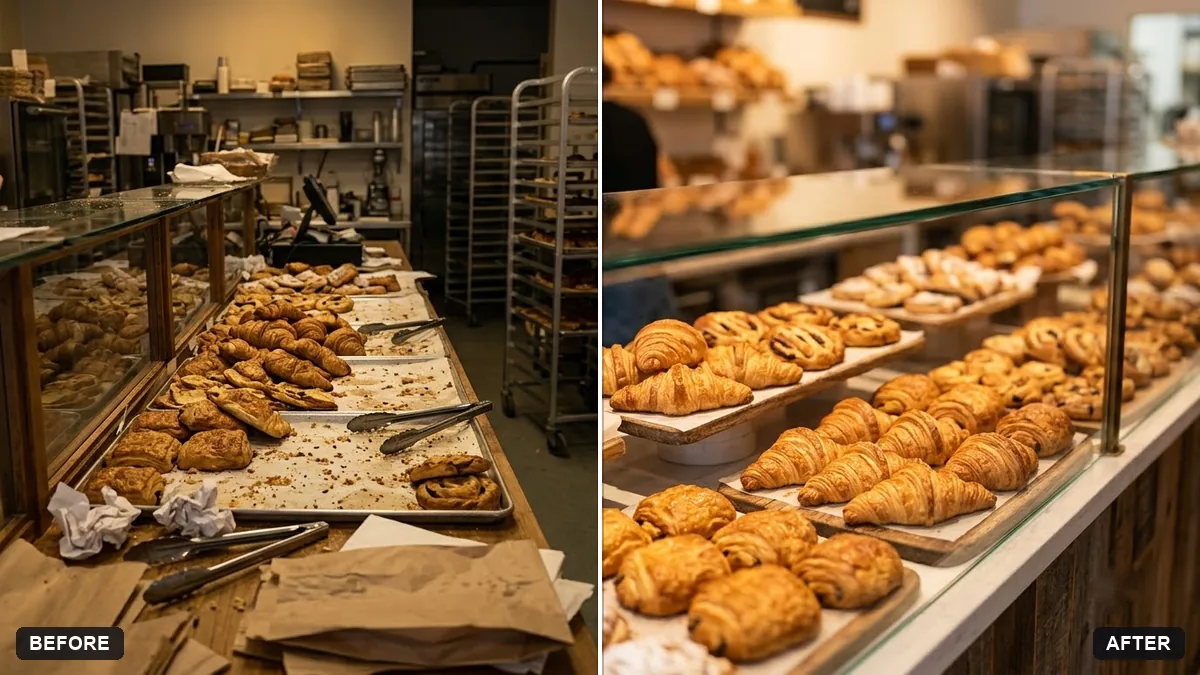
Once the food and timing are sorted, a well-styled drinks table or dessert spread photographed from your own setup makes for a nicer memory than a quick phone snap. The cocktail bar mood prompt and the bakery-style display prompt both work well on a phone photo of your own table, lifting the lighting and colour without changing what's actually on it.
Where to go from here
If the occasion is a specific festival rather than a regular dinner, see AI prompts for hosting a Diwali party or Thanksgiving hosting and leftovers, which cover the same idea for those dates. For more food photo ideas once the table is set, browse the food photo prompts collection, or use the prompt builder to adapt any prompt here to your own menu.
Quick checklist
- Set the menu first, with dietary needs and your actual kitchen equipment stated upfront.
- Pick drinks to match the finished menu, including a non-alcoholic option per course.
- Ask for a minute-by-minute schedule working backwards from when guests arrive.
- Give exact oven times and temperatures, not vague ones, so the timing is real.
- Print or save the final schedule somewhere you'll see it while cooking.
Prompts to try
More prompts on this topic
- Menu photo for food delivery appsGemini · ChatGPT
- Clean dish cutout for menusGemini · ChatGPT
Comments
No comments yet. Be the first to share what worked for you.