Cinematic portrait AI prompts: make a selfie look like a movie still
Published
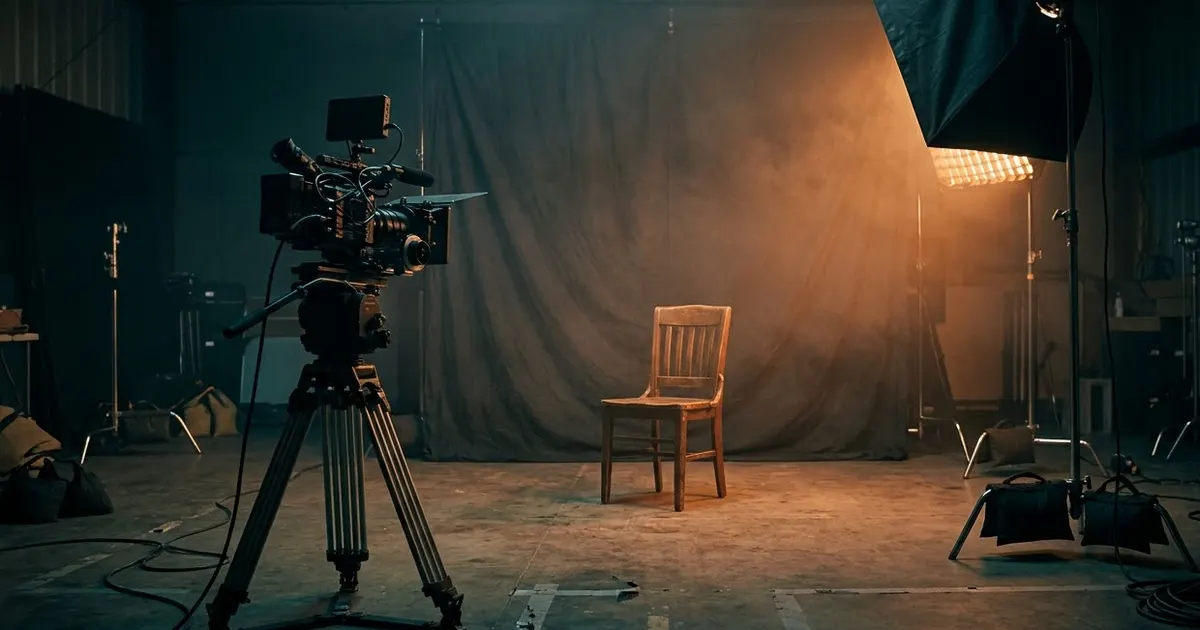
Short answer"Cinematic" isn't one word, it's four: a named light source, a lens, a shallow depth of field, and a colour grade. Put all four in the prompt and the photo starts to look like a still from a film; leave any one out and it looks like a snapshot with a filter.
Full collectionCinematic portrait prompts15 prompts with examples, steps and fixes →Ask an AI tool for a "cinematic photo" and you'll usually get something darker and moodier than your original, but it won't look like a film still. That's because "cinematic" isn't really a style, it's a combination of four technical choices a cinematographer makes on purpose: where the light comes from, what lens they used, how much of the background is in focus, and what the colours lean towards.
Once you name those four things instead of the single word "cinematic", the result changes completely. This guide breaks each one down with real prompts.
The four words that make a photo look cinematic
| Choice | What to say | What it does |
|---|---|---|
| Light source | "lit from one side", "neon glow on the face", "light through a window" | Gives the face shape and mood, instead of flat, even light |
| Lens | "85mm lens", "shallow depth of field" | Blurs the background and flattens the face slightly, the way a portrait lens does |
| Depth of field | "shallow depth of field", "background softly blurred" | Separates the subject from the background, the single biggest giveaway of a real camera |
| Colour grade | "teal and orange grade", "warm and cool tones" | The colour relationship film colourists use between skin tones and backgrounds |
Use all four together and the AI has a genuine technical brief instead of a vague mood word.
The editorial version
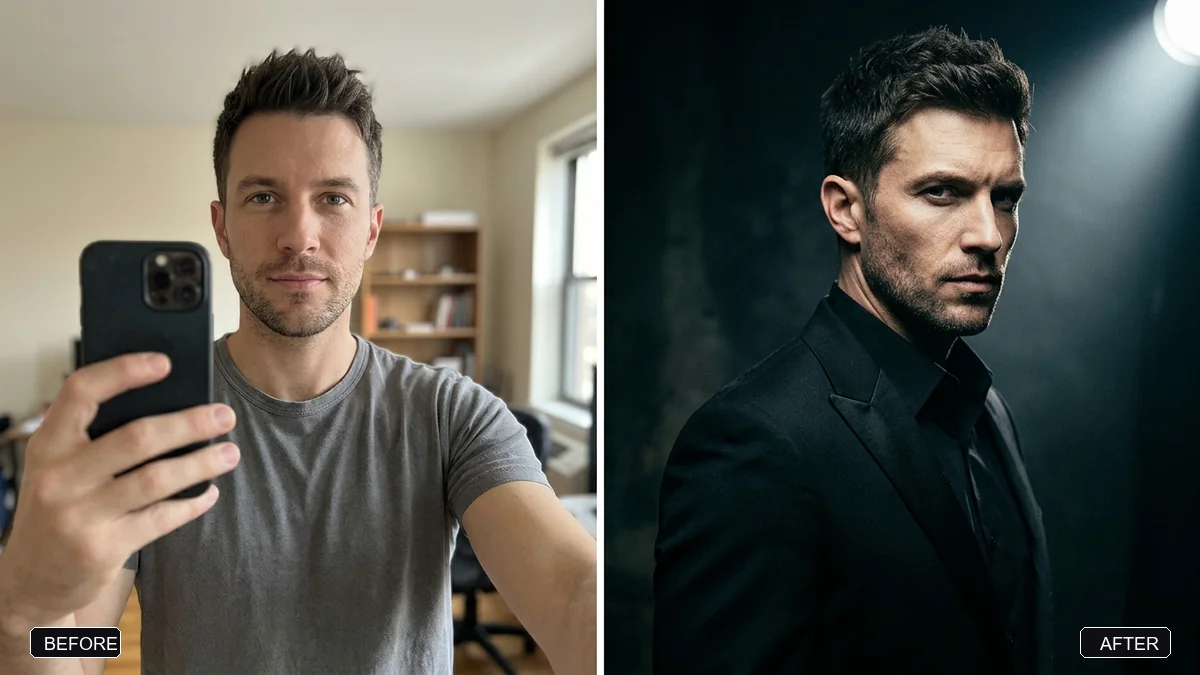
For a magazine-style portrait, the cinematic luxury editorial portrait prompt puts all four pieces in one request:
Transform this photo of me into a luxury fashion editorial portrait. Keep my face, features, skin tone and hairstyle exactly the same.

Outfit: [OUTFIT, e.g. a black tailored suit]. Setting: [SETTING, e.g. a dark studio with a single hard spotlight].

Cinematic lighting with deep shadows, 85mm lens, shallow depth of field, rich contrast, subtle film grain, and a high-fashion magazine colour grade. Portrait 4:5.
Notice the lighting is described as "deep shadows" rather than just "dramatic". A camera lens and an aspect ratio are also named directly. If you want an even more premium feel, add "shot on medium-format film" at the end, which pulls in the softer highlight roll-off that medium-format cameras are known for.
Colour-led portraits: neon and night
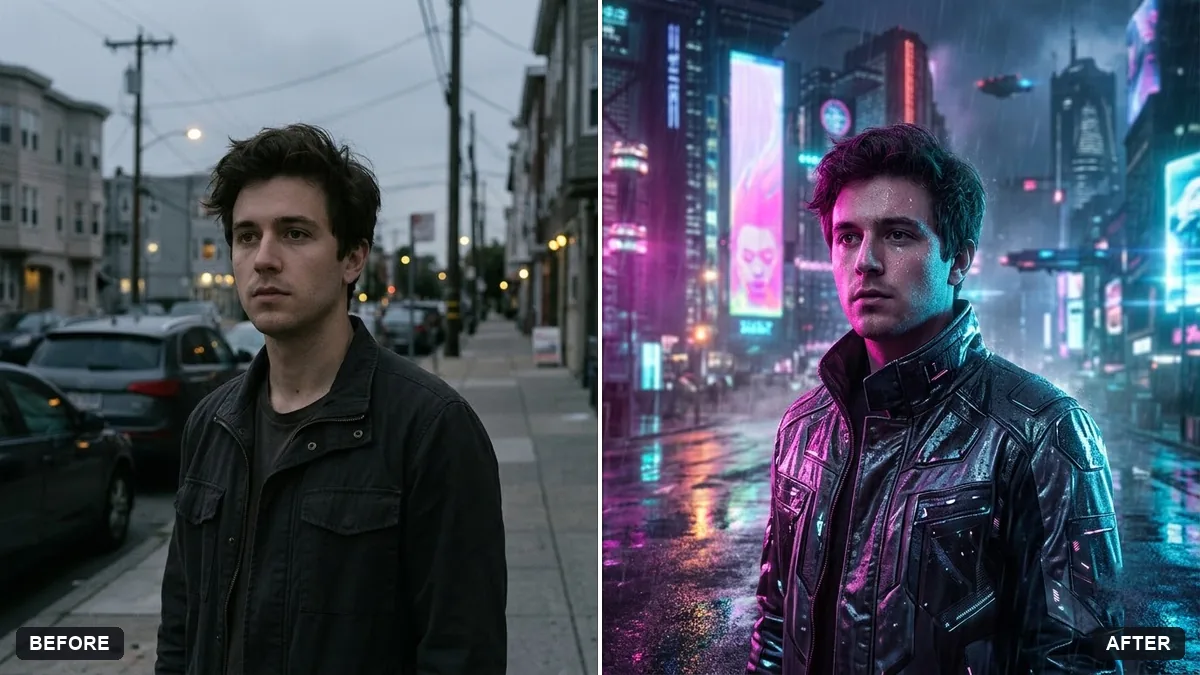
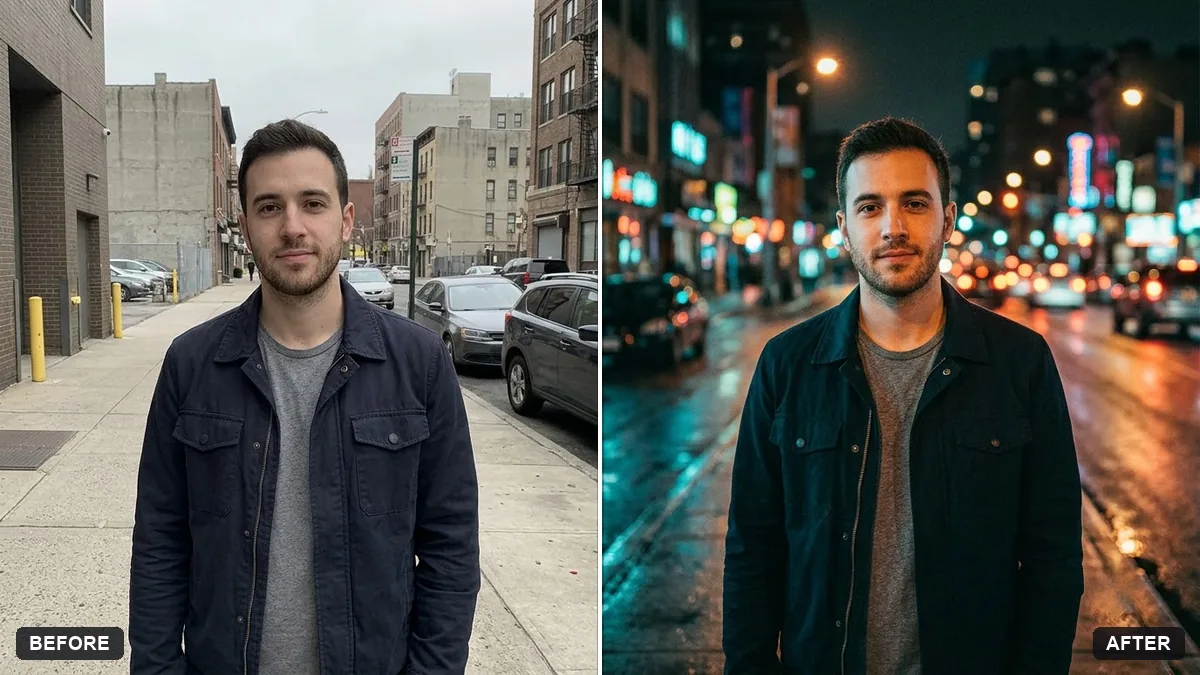
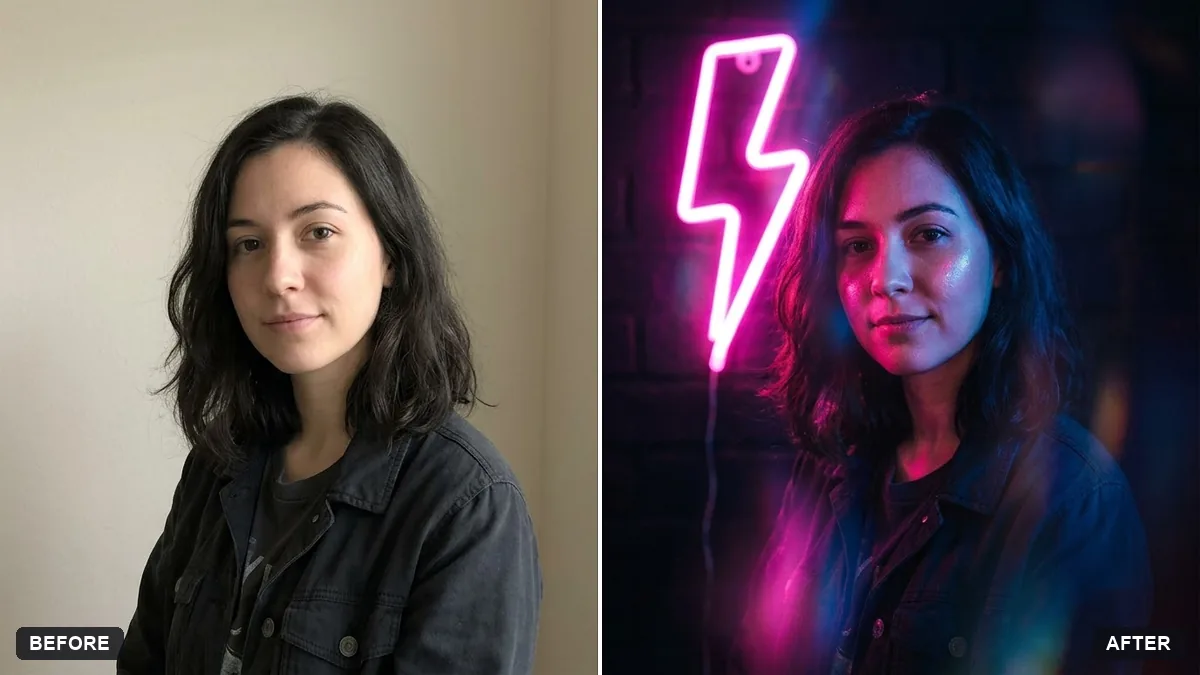
Colour grading carries most of the cinematic feeling in night shots. The cyberpunk neon portrait prompt is built around two named colours of light hitting the face from the sides:
Turn this photo into a cyberpunk-style portrait. Keep my face and features unchanged.

Add [COLOUR] and [COLOUR] neon lighting on my face from the sides, a rainy futuristic city with holographic signs behind me, a reflective jacket, wet-skin highlights, cinematic teal and magenta grade, shallow depth of field.
Keep the neon light sources on the sides of the face, not directly on top of it, so your actual features stay visible under the colour. For a calmer version of the same idea, the city night bokeh portrait prompt swaps neon for streetlights and asks for a "teal and orange colour grade", the pairing most associated with modern film colour because warm skin tones sit naturally against cool backgrounds.
Mood-led portraits: light as the subject
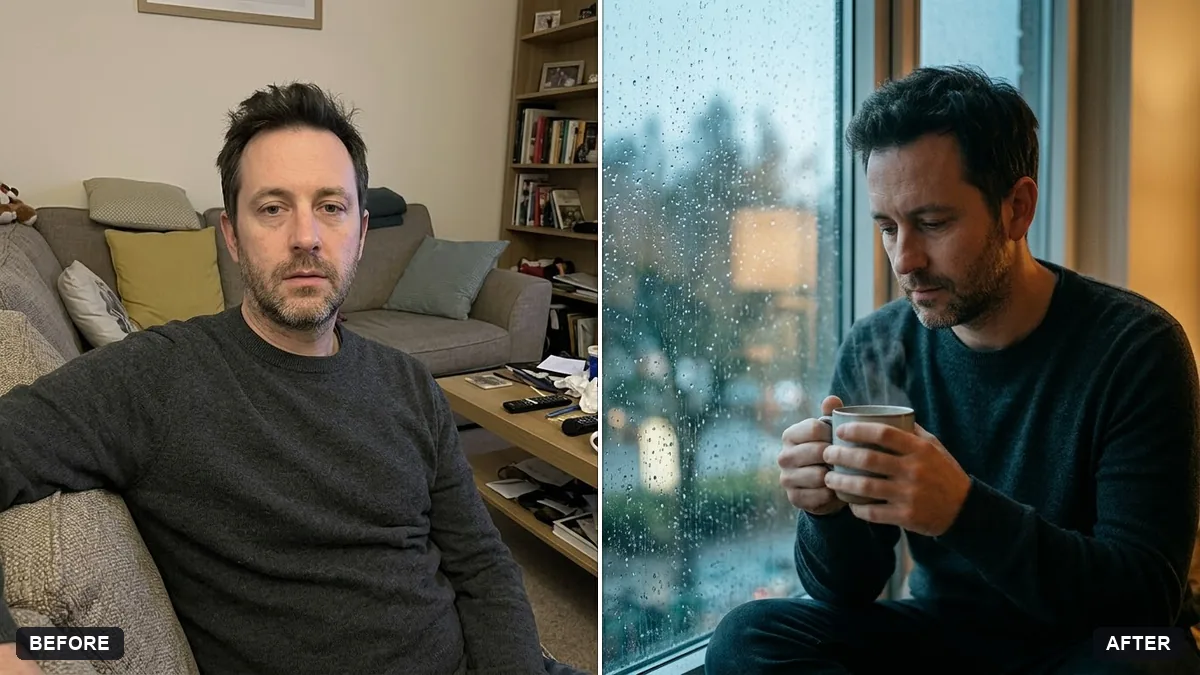
Not every cinematic portrait needs colour or a city. The moody rainy window portrait prompt uses one simple light source to carry the whole mood:
Turn this photo into a moody portrait of me looking out of a rainy window. Keep my face and features exactly the same.

Raindrops on the glass, soft blue-grey light from outside, a warm glow inside, a cup of [TEA / COFFEE] in my hands, a reflective and calm mood, shallow depth of field, cinematic tones.
A calm, quiet expression in the source photo matters more here than in a dramatic shot. The mood of this one comes almost entirely from the light, so a flat, smiling photo tends to fight against it.
Signs the result isn't quite there yet
- It looks dark but not moody. Ask for a named light source, such as "soft light from one window" or "a single hard spotlight," rather than just "darker."
- The background is too sharp. Add "shallow depth of field, background softly out of focus" directly.
- The colours look muddy instead of graded. Name a specific pairing, like "teal and orange" or "warm highlights, cool shadows," rather than "cinematic colours."
- Your face looks flattened or changed. Add "keep my facial features and proportions exactly the same" before the lighting instructions.
Where to go from here
If the editorial, magazine-style end of this look is what you're after, the AI luxury editorial photoshoot guide goes deeper into outfit and setting choices for that trend. The full set of cinematic portrait prompts, including astronaut, samurai and neon-sign looks, is in the cinematic portrait prompts collection, and the prompt builder can turn any photo into one with these same four ingredients.
Quick checklist
- Name a light source: which side, what colour, how hard or soft.
- Name a lens or depth of field: "85mm", "shallow depth of field."
- Name a colour grade: "teal and orange," "warm and cool."
- Keep facial features named as unchanged before the style instructions.
- Start from a calm, clear photo; the mood comes from the light, not the expression.
Prompts to try
More prompts on this topic
- Selfie to a cinematic movie momentHiggsfield · Kling
- Golden wheat field portraitGemini · ChatGPT
- Beach sunset portraitGemini · ChatGPT
- Monsoon umbrella portraitGemini · ChatGPT
- Film noir detective portraitGemini · ChatGPT
- Cinematic colour grade with vignetteGemini · ChatGPT
Comments
No comments yet. Be the first to share what worked for you.