AI rangoli design prompts: easy, colourful patterns you can actually draw
Published
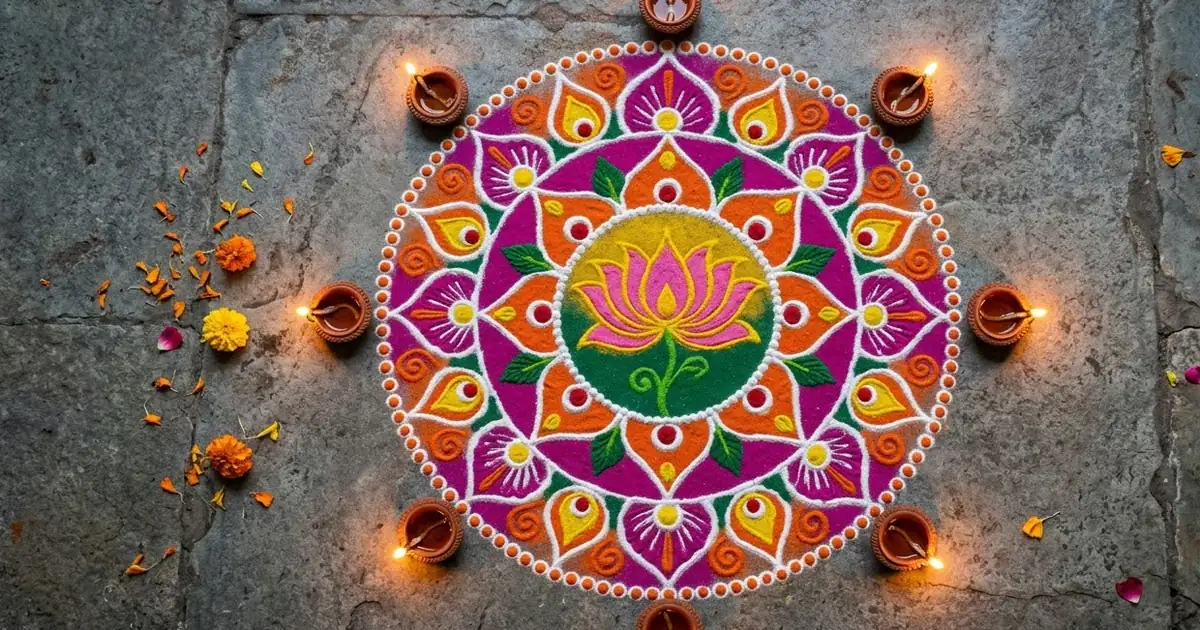
Short answerAsk the AI for a top-down view of a rangoli, name the size, the shape and four or five colours, and say how hard it should be to draw. Then ask for a step-by-step version or a dot grid so you can copy it onto the floor.
Diwali falls on Sunday 8 November 2026, and rangoli planning starts weeks before. Many people now ask AI for design ideas first, then draw their favourite on the floor. AI is good at this, but only if you ask for a design a real person can draw. Otherwise you get beautiful patterns that would take a professional three days.
The rangoli prompt formula
Name these five things:
- View: "top-down, flat, seen from directly above".
- Size and shape: "a 2-foot circle", "a square for a doorway", "a corner design".
- Colours: four or five named powder colours.
- Difficulty: "simple, for a beginner, bold shapes, no fine detail".
- Extras: diyas, flower petals, a central lotus.
The main prompt
This builds on our geometric rangoli pattern prompt:
Design a Diwali rangoli, seen from directly above, on a plain grey stone floor.

Size and shape: a circular design about [SIZE, e.g. 2 feet] across.
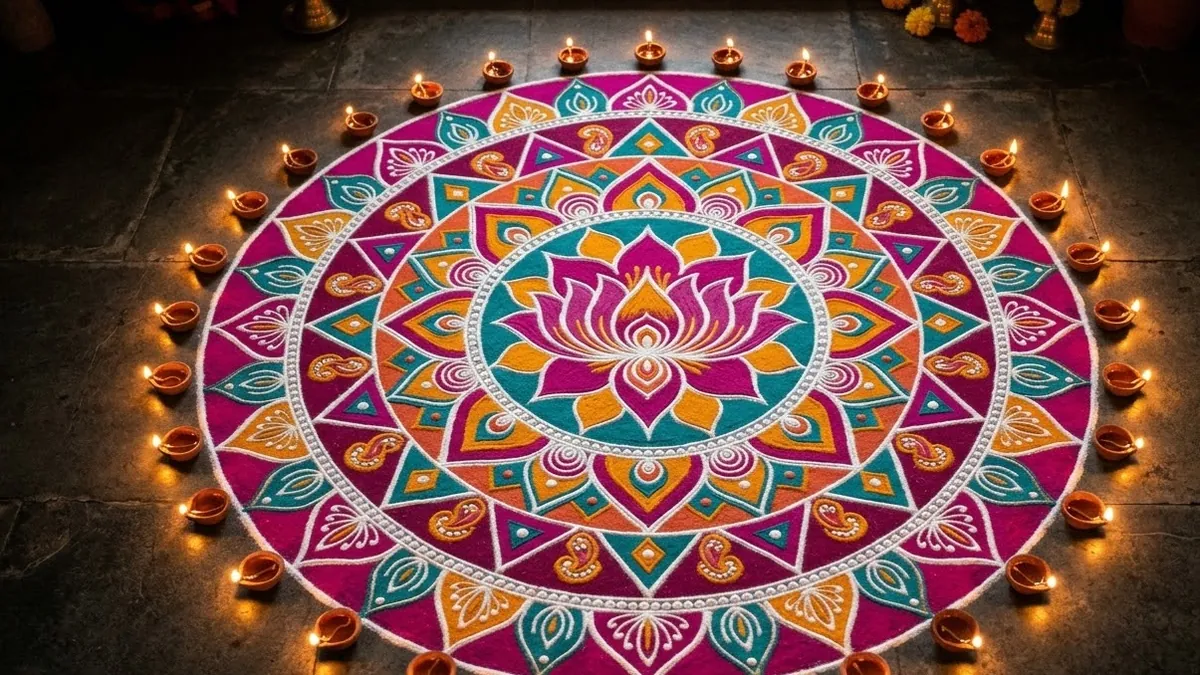
Pattern: a lotus in the centre, surrounded by a ring of simple petals and an outer ring of small triangles.
Colours: [COLOURS, e.g. magenta, orange, yellow, white and green] powder, with clean white outlines.
Difficulty: [LEVEL, e.g. easy for a beginner, bold shapes, no fine details].
Extras: eight small lit clay diyas evenly spaced around the edge.
Realistic photo of real coloured powder. No text.
Get a version you can copy
A photo is nice, but you need a plan to draw it. After you have a design you like, ask for one of these:
A step-by-step sheet:
Show this rangoli as a 4-step drawing guide in a 2x2 grid: step 1 the white outline only, step 2 the centre filled, step 3 the middle ring filled, step 4 finished with diyas. Top-down, simple, clear.
A dot grid (kolam style): "Redraw this as a dot-grid pattern: 9 by 9 dots, with lines connecting them, black on white, easy to copy." Dot grids are the easiest way to keep a design even.
A colour plan: "Show this rangoli as a flat colouring-book outline with each area labelled with a number, and a key of which number is which colour." Check the numbers. AI sometimes gets them wrong, so treat it as a guide.
Design ideas by space
- Front door: a half-circle or a rectangle, "fits a doorway 3 feet wide".
- Corner: "a quarter-circle design that fits in a corner".
- Small flat balcony: "a 1-foot circle with bold shapes".
- Office or shop entrance: "a large 4-foot circle with the business colours [COLOURS]". Keep your logo out of the rangoli. It rarely works in powder.
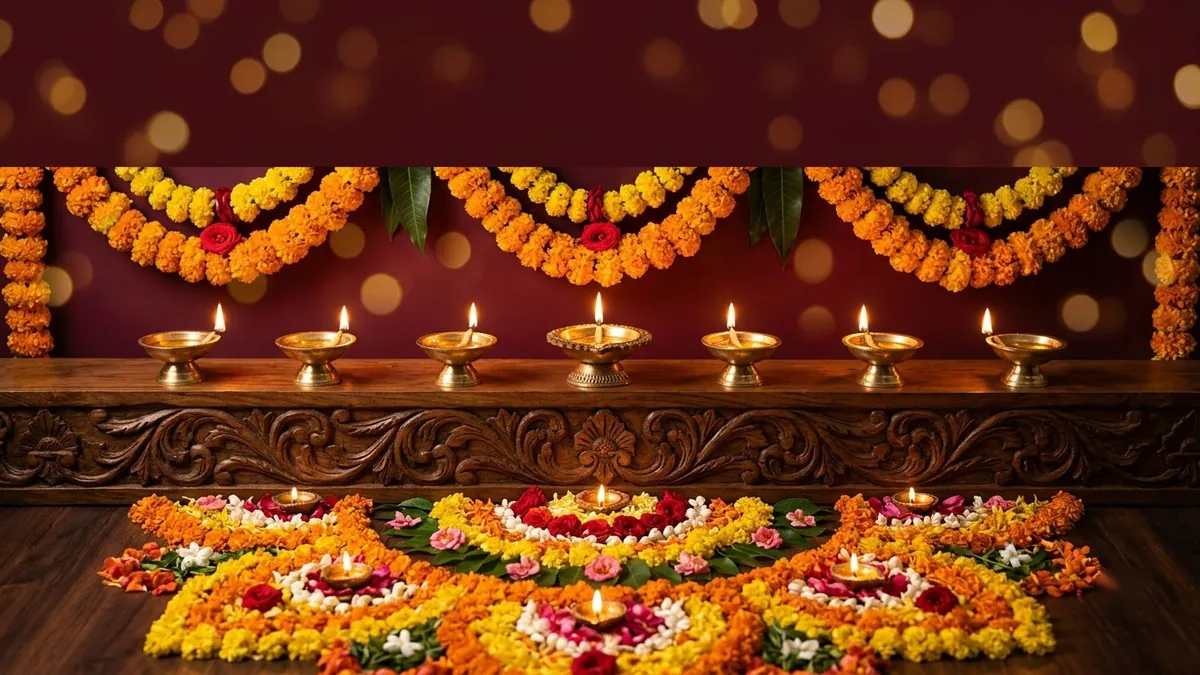
- Flower rangoli: "made only of marigold petals, rose petals and green leaves, no powder". This is easier for beginners and smells lovely.
Show it off
Once your real rangoli is done, photograph it from above in daylight. Then you can:
- Ask AI to "keep this rangoli exactly as it is, add a soft evening glow and lit diyas around it".
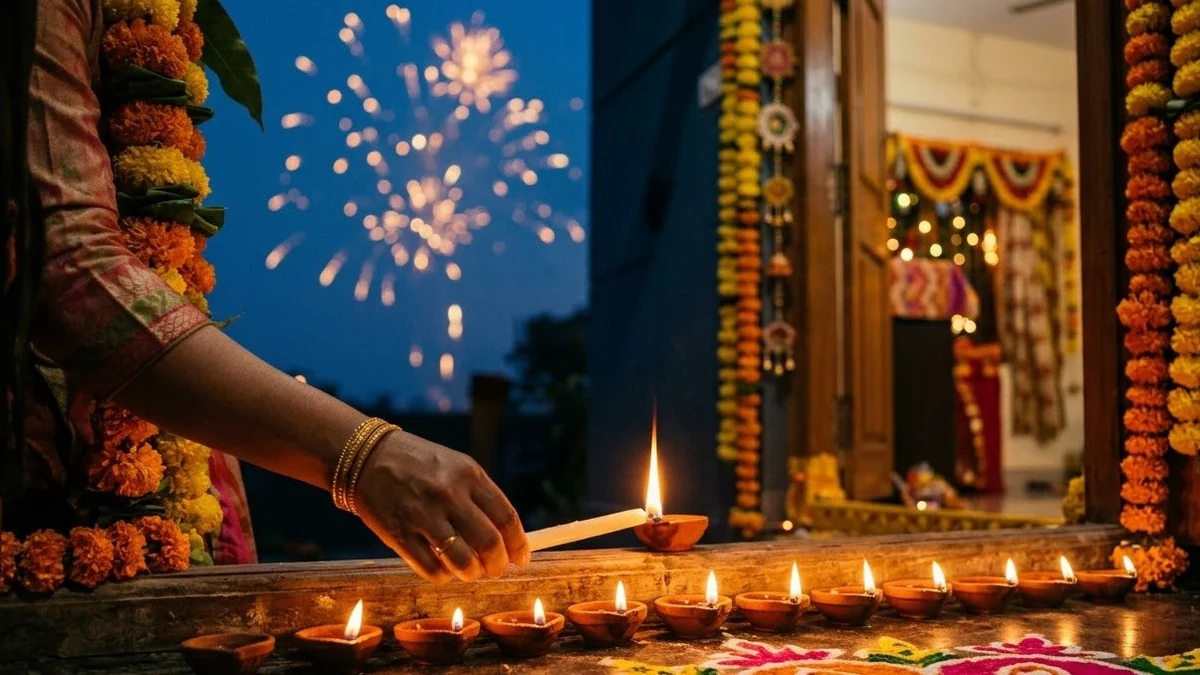
- Make a short clip of diyas being lit around it with the Diwali diya lighting prompt.
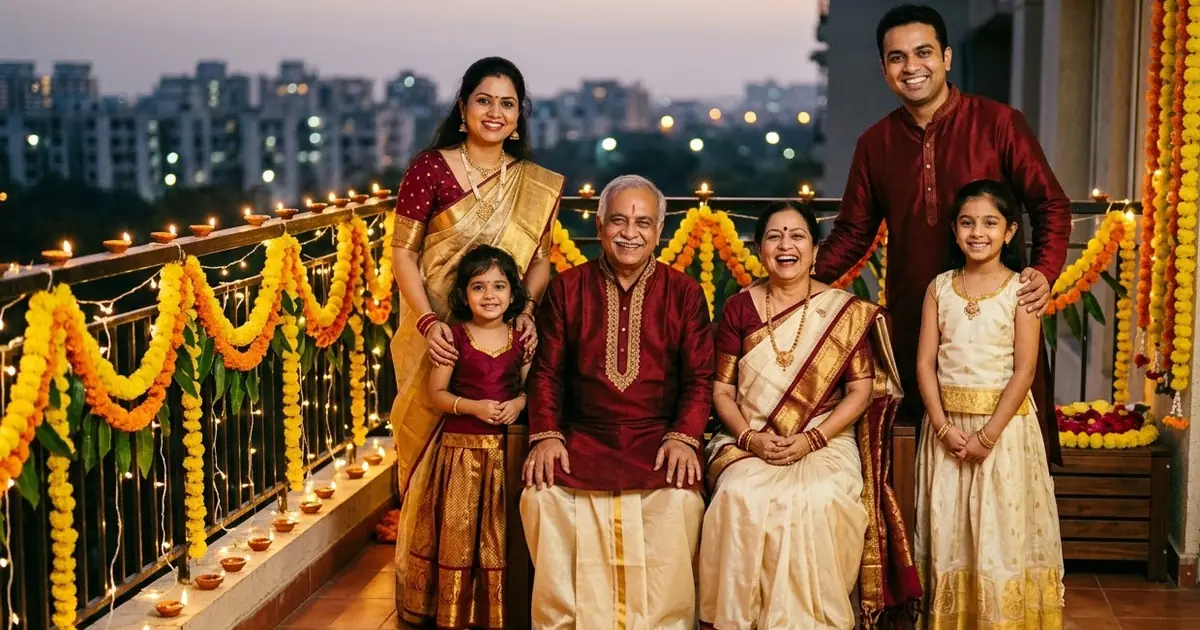
- Take a family photo beside it and use the Diwali family portrait prompt.
Fixing common problems
Too complicated. Add "no more than 3 rings, bold shapes only, beginner level".
Not symmetrical. Ask for "perfectly symmetrical, 8-fold symmetry".
Looks like paint, not powder. Say "real coloured powder with a slightly grainy texture and soft edges".
Wrong angle. Always include "seen from directly above".
Where to go from here
For more Diwali ideas, see our Diwali AI photo prompts and festival greeting poster guide. All the prompts here are free in the image generation prompts collection.
Quick checklist
- Diwali: Sunday 8 November 2026.
- Top-down view, size, shape, colours, difficulty.
- Ask for a step-by-step or dot-grid version.
- Beginner level unless you're experienced.
- Check any colour numbers before you start.

Comments
No comments yet. Be the first to share what worked for you.