AI prompts to turn a photo into a painting
Published
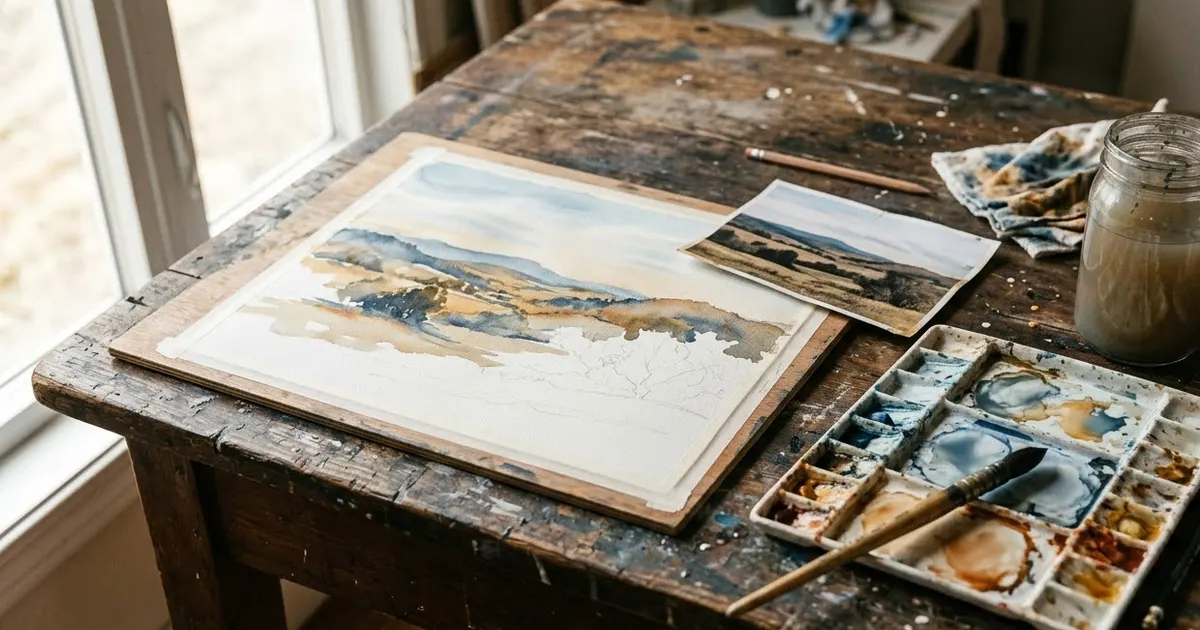
Short answerName the painting medium, not just "painting", and describe its physical qualities: visible brushstrokes, paper texture, bleeding edges or cracked varnish. The medium's texture is what separates a convincing painting from a smoothed-over photo filter.
Full collectionPhoto to painting and sketch prompts15 prompts with examples, steps and fixes →"Turn this into a painting" usually gets you a photo with a slight smudge filter over it, not something that looks hand-painted. Real paintings have texture: paper grain under a watercolour wash, visible brush ridges in oil paint, the rough tooth of paper under oil pastel. Naming the actual medium, and its physical qualities, is what makes the AI reach for those details instead of a generic "artistic" look.
This guide covers the three most popular styles for turning a photo into a painting, and how to keep the result still recognisable as you.
Why naming the medium matters
Every painting medium has its own fingerprint. Watercolour bleeds and leaves white paper showing through. Oil paint sits thick and holds the mark of the brush. Ink wash is mostly empty space with a few confident strokes. If you don't name one, the AI defaults to something generic and flat. If you do, it has a real visual target to copy.
| If you want this look | Name this medium |
|---|---|
| Soft, dreamy, a bit unpredictable | Watercolour |
| Rich, classical, moody lighting | Oil painting |
| Minimal, calm, a lot of empty space | Ink wash |
| Flat, matte, illustrated postcard | Gouache |
| Thick, waxy, hand-drawn energy | Oil pastel |
The watercolour portrait
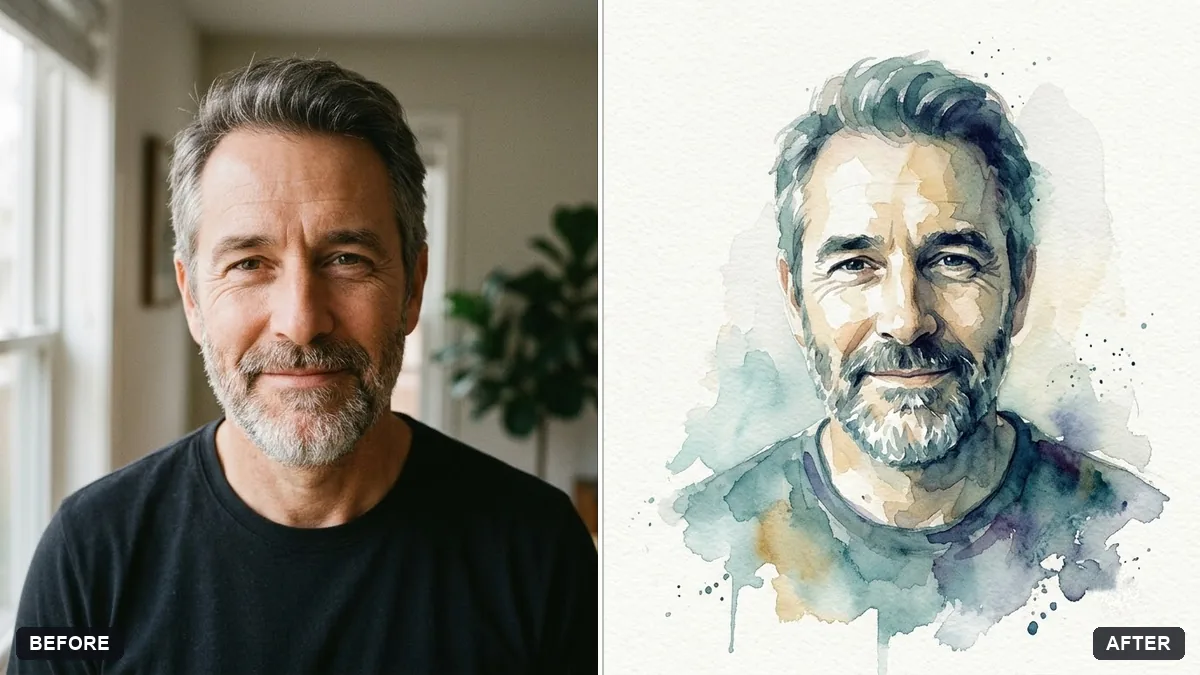
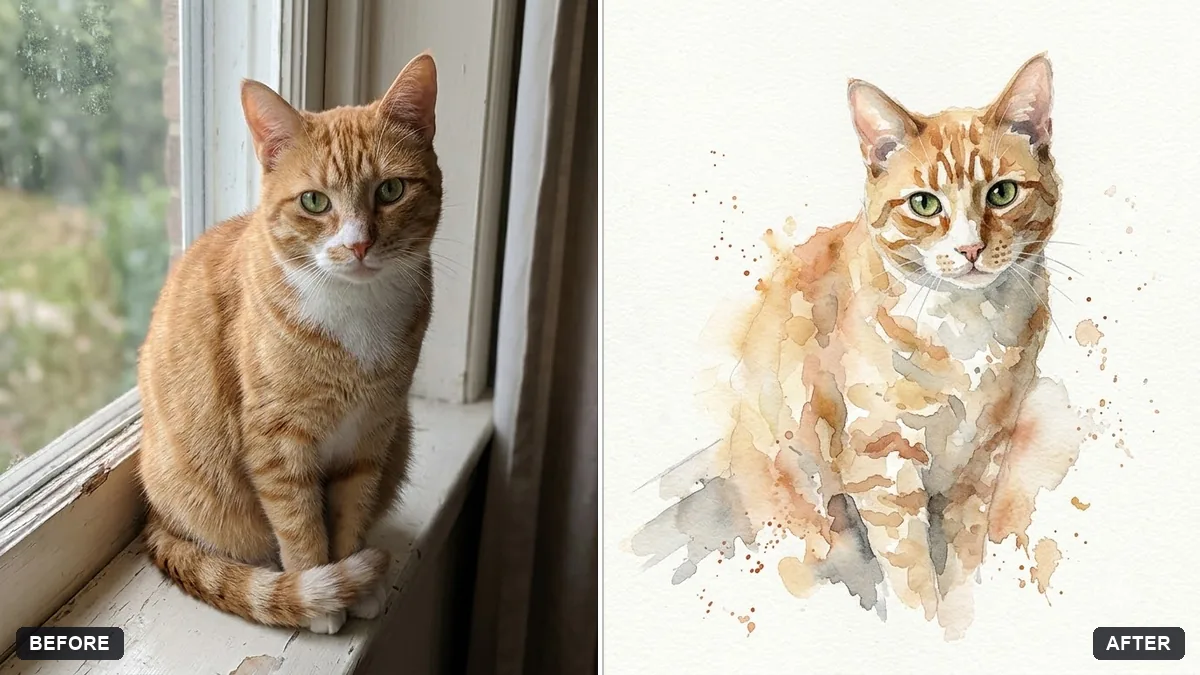
Watercolour is the most forgiving style to start with, and it suits portraits well because the slight imprecision of real watercolour hides small flaws rather than exposing them. The watercolour painting from your portrait prompt:
Turn this photo into a delicate watercolour portrait. Keep the face recognisable and the features accurate.

Loose wet-on-wet washes, visible paper texture, soft bleeding edges, a muted [COLOUR PALETTE] palette, unpainted white paper around the edges, a few small paint splashes. Keep the background simple and light.
The three details doing the work here are the paper texture, the bleeding edges, and the unpainted white space around the frame. Leave any of them out and the result tends to look more like a filtered photo than a painting. This same approach works for pets: the pet watercolour portrait prompt asks for accurate markings and eye colour first, then the same loose washes and splashes.
The Renaissance oil painting
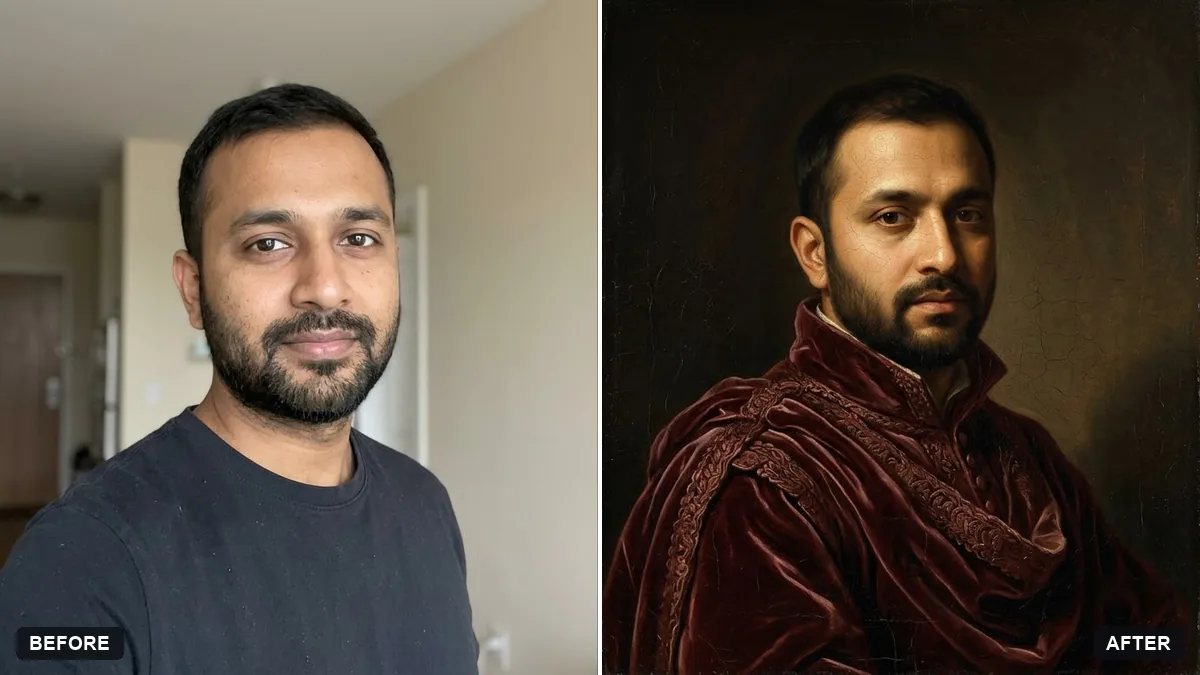
For something more dramatic, the Renaissance oil painting prompt leans on a very specific lighting style instead of texture alone:
Paint me as a Renaissance-style oil portrait, based on this photo. Keep my facial features accurate.

Dark, moody background, chiaroscuro lighting from one side, rich [COLOUR] velvet clothing, visible brush strokes, a trace of cracked varnish texture, a three-quarter pose, museum quality.
Chiaroscuro, the strong contrast between a lit side of the face and a shadowed side, is the single word doing the most work in this prompt. It's what makes an oil portrait look like it belongs in a gallery rather than a costume photo. If the first result looks too soft or evenly lit, ask specifically for "stronger shadow on one side of the face." Swap "Renaissance" for "Baroque" or "Impressionist" for a different mood from the same structure.
The ink wash painting
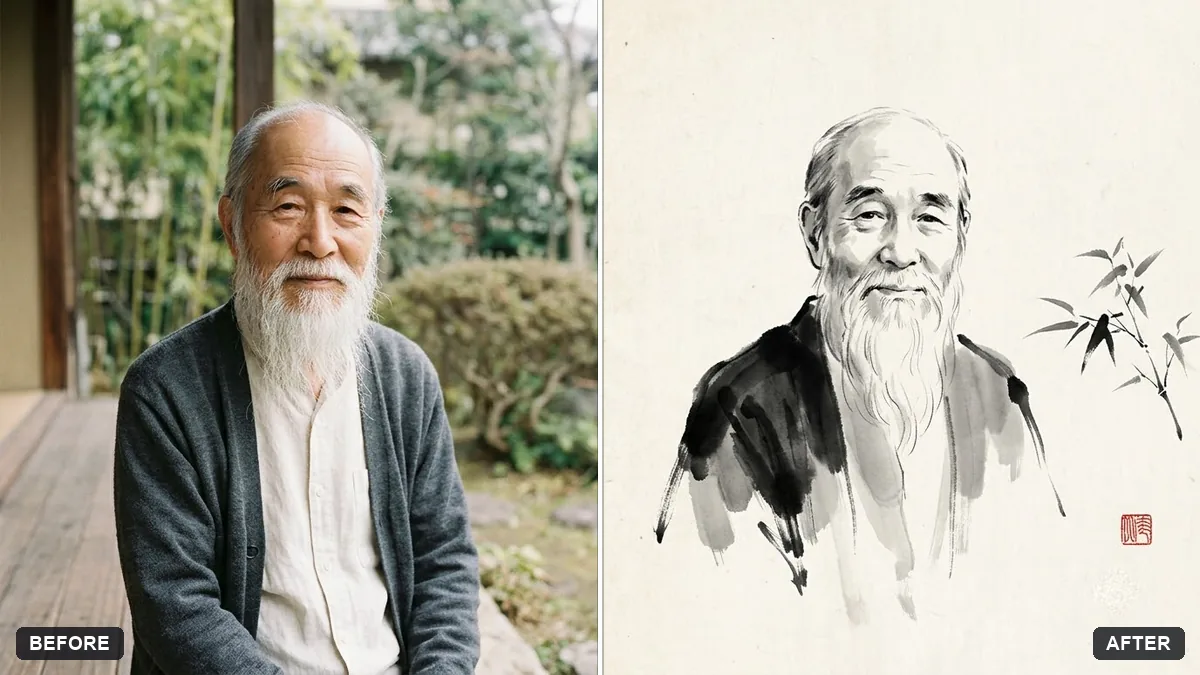
Ink wash is the opposite instinct from oil: restraint instead of richness. The ink wash painting portrait prompt:
Turn this photo into a traditional East Asian ink wash painting. Keep my face recognisable.

Flowing black ink brush strokes with soft grey washes, minimal detail, a lot of empty space, a small red seal stamp, delicate [PLANT, e.g. bamboo or plum blossom] in the corner, rice paper texture, a calm and poetic mood.
The instinct with AI prompts is usually to add more description. Ink wash is one of the few styles where asking for less detail and more empty space gets the better result. If you want to add a short line of calligraphy, only do it if you can check the characters yourself, since the AI can get the strokes wrong in ways you won't notice but a native reader will.
For landscapes instead of portraits
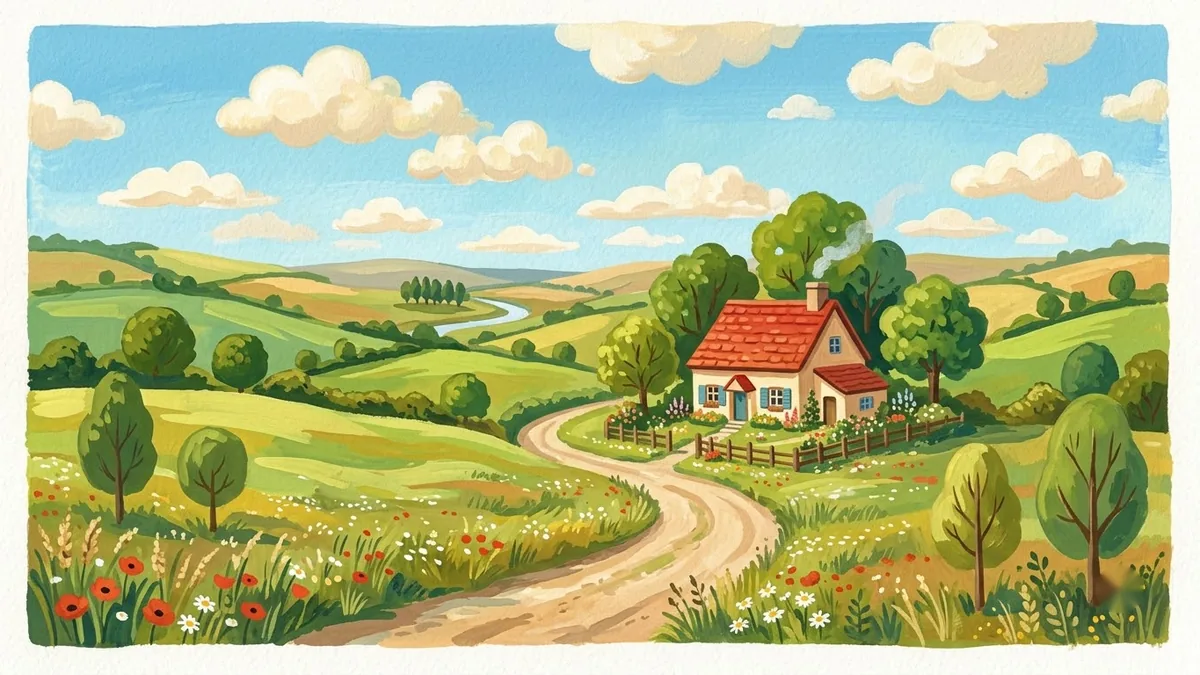
If the photo is a place rather than a person, gouache and oil pastel give two different moods. The gouache painting of a countryside prompt asks for "matte, opaque, flat colour blocks" to get the postcard-illustration look gouache is known for, rather than the glossy blend you'd get from leaving the medium unnamed.
Fixing the common problems
- It looks like a filter, not a painting. Add the texture words back in: paper grain, brush ridges, bleeding edges, whichever fits the medium.
- The face changed too much. Add "keep the facial proportions and features exactly as in the photo" at the start, and repeat it if the next attempt drifts again.
- It's too polished. Ask for "a few imperfections: an uneven wash, a slightly crooked line, a small splash."
- The colours are too bright or cartoonish. Name a specific muted palette: "dusty blues and warm greys" works better than "nice colours."
Where to go from here
If you'd rather keep a photo-realistic look but still push the style, the AI anime portrait prompts guide covers a different kind of stylising with the same "keep the face recognisable" discipline. The full set of painting styles, including gouache and oil pastel landscapes, is in the photo to painting and sketch prompts collection, and the prompt builder can write a custom version for any photo you have.
Quick checklist
- Name the actual medium: watercolour, oil, ink wash, gouache or oil pastel.
- Describe its physical texture, not just its name.
- Say what to keep accurate: face shape, features, pet markings.
- For portraits, ask for a muted palette rather than "nice colours."
- If it looks like a filter, add the texture words back in and try again.
Prompts to try
More prompts on this topic
- Watercolour painting time-lapseVeo · Kling · Seedance
- Layered paper craft portraitGemini · ChatGPT
- Bring a painting or artwork to lifeHiggsfield · Kling
- Linocut print portraitGemini · ChatGPT
- Hair oil adVeo · Kling · Seedance
Comments
No comments yet. Be the first to share what worked for you.