Diwali video reel prompts: diyas, rangoli and mithai, shot like memory footage
Published
Short answerFor a Diwali reel that stands out, ask for a home-video camera style on your diya shot, a slow overhead rise on your rangoli, and a macro push-in on your mithai, each with real flame light rather than a filter.
Diwali falls on Sunday 8 November this year, with Chhath Puja following a week later on 15 November. In the days before, most people's camera rolls fill up with the same three shots: diyas in a row, a rangoli from above, sweets on a plate. Nothing wrong with any of them, but a still photo and a short video ask for different things from a prompt. Motion is what makes a Diwali post get watched to the end instead of scrolled past.
The three prompts below aren't the usual "turn this photo into a video" animation. Each one is built for a different kind of shot, because a diya clip, a rangoli clip and a mithai clip all want a different camera.
Diyas, shot like an old home video
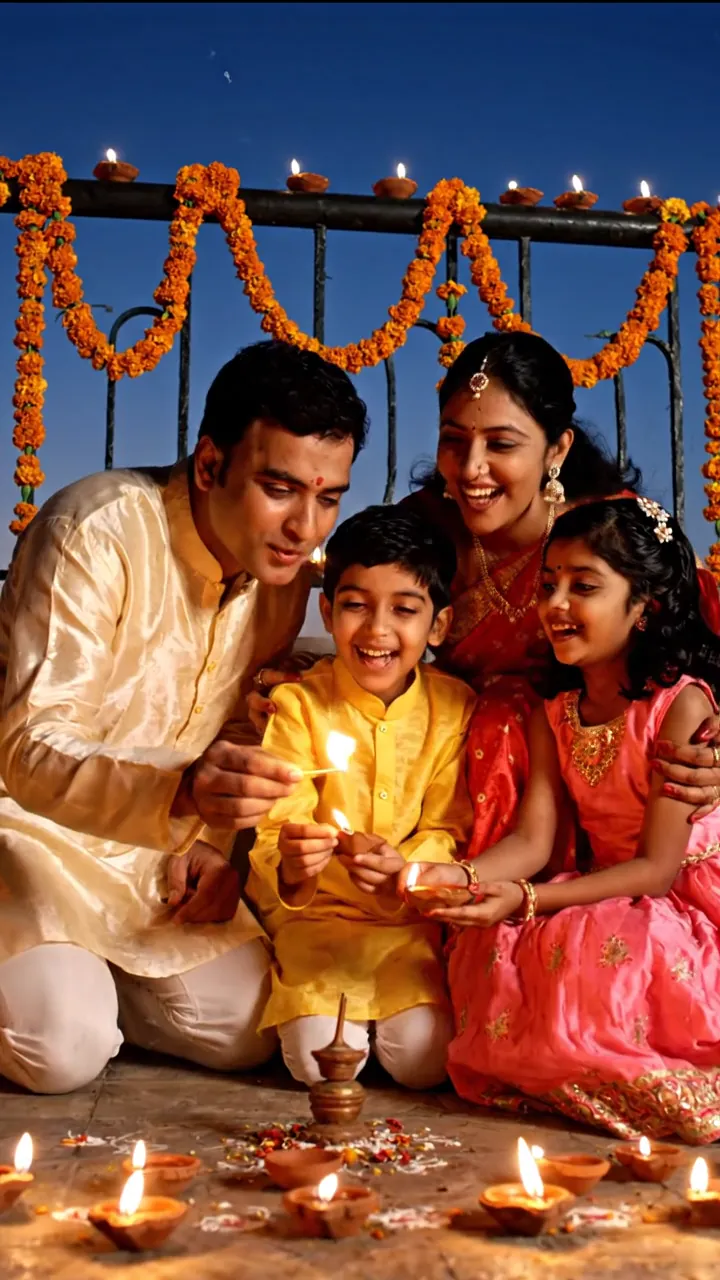
The Diwali family diyas prompt doesn't aim for a clean, cinematic look. It asks for the opposite: tape wobble, grain, and oversaturated colour, the way a camcorder clip from the 1990s actually looked.
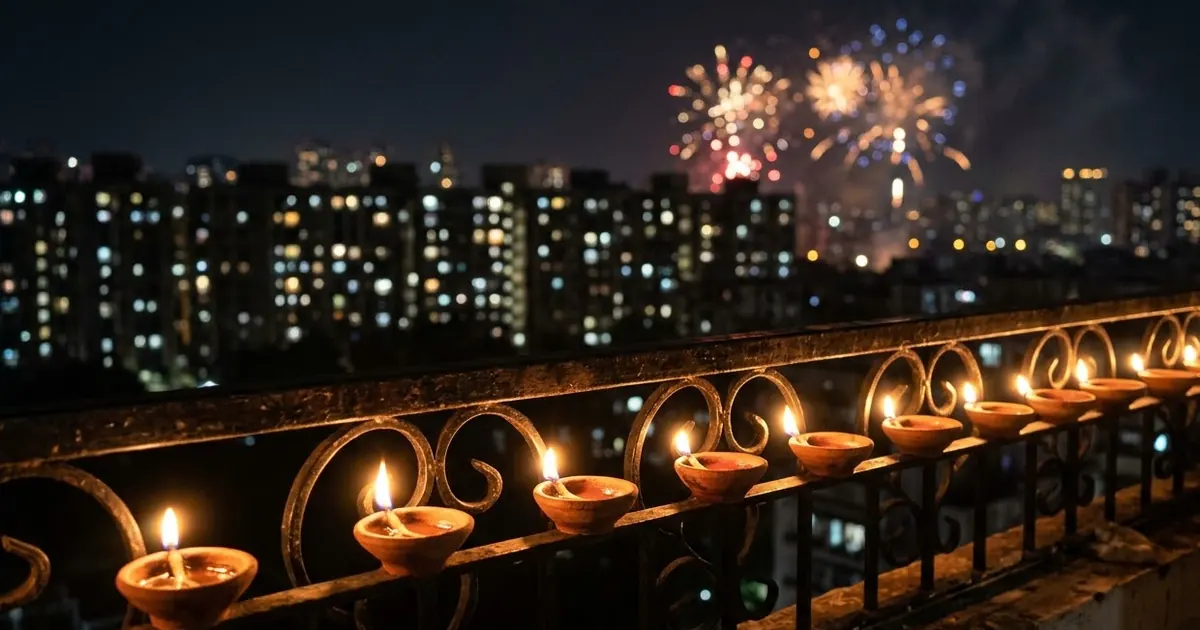
Vertical video that looks like grainy 1990s home-video footage: [FAMILY, e.g. a family of four (two adults, two children)] kneeling together on a terrace at dusk, lighting [LIGHTS, e.g. rows of small clay diyas] along the edge of the floor, the diya flames glowing warm, a string of marigold flowers draped on the railing, the sky fading from orange to deep blue. Handheld camera with slight tape wobble, soft focus, visible tape grain, oversaturated warm tungsten colours, a slow gentle zoom in. The children laugh and blow softly on a flame. Calm, nostalgic, warm mood. Sound: soft crackle of tape, distant firecrackers, muffled family laughter with no clear words.
Name the camera behaviour as well as the scene: handheld, tape wobble, a slow zoom in. If the first result comes back too clean, ask for more of the tape artefacts directly, such as colour bleed or a date stamp in the corner.
A rangoli, filmed from straight above
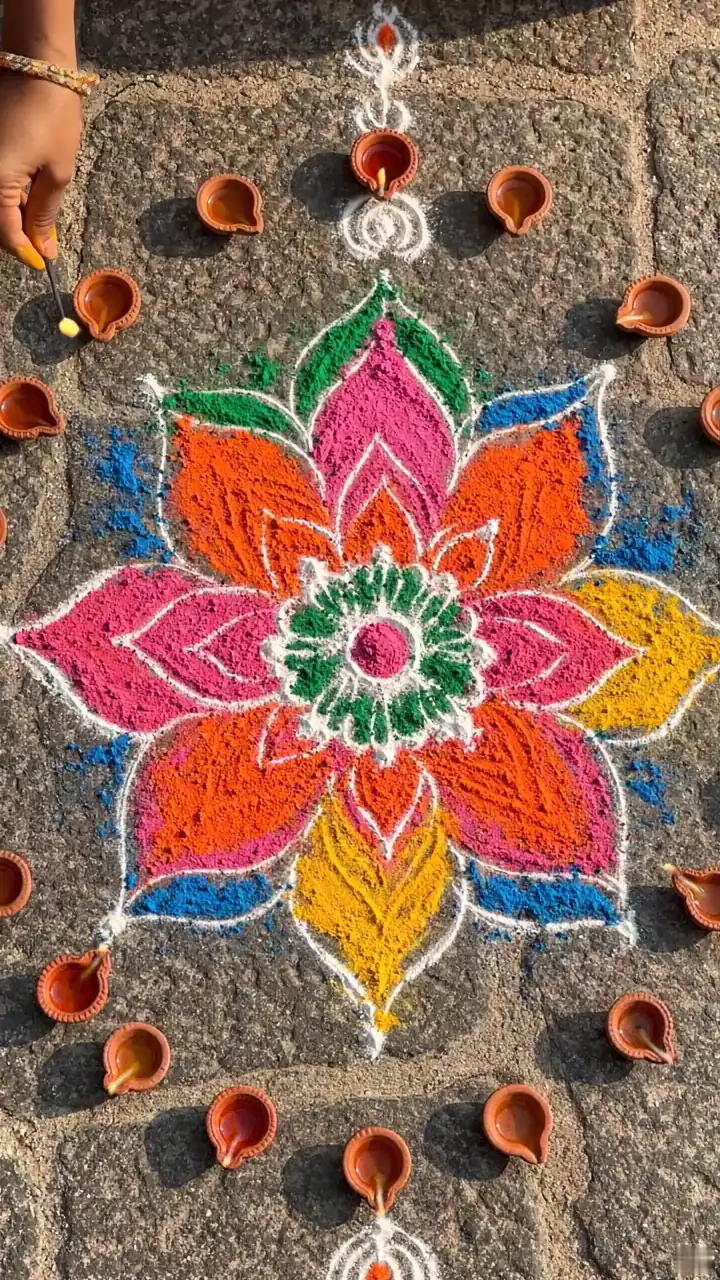
Process clips do well because the pattern is the only thing changing from frame to frame. The rangoli powder bloom prompt keeps the camera fixed overhead and lets the colour do the work.
Satisfying vertical top-down video. Close overhead shot of a swept stone courtyard floor where a pair of hands pours fine coloured powder ([COLOURS, e.g. bright pink, orange, yellow, green, deep blue]) through the fingers to draw [PATTERN, e.g. a large round rangoli pattern], petal by petal, growing outward from the centre into a perfect symmetrical flower, with tiny clay diyas placed around it at the end, each flame lighting the colours. The camera looks straight down and slowly rises. Warm morning light, crisp detail, gentle powder dust in the air. Calm, meditative, satisfying mood. Sound: soft powder sprinkle, a faint wind chime, a soft tanpura drone.
Ask for the diyas to appear at the end, not the start. The final shot then has light as well as colour, which reads better as a closing frame for a Reel or a WhatsApp status.
A sweet shop counter, up close
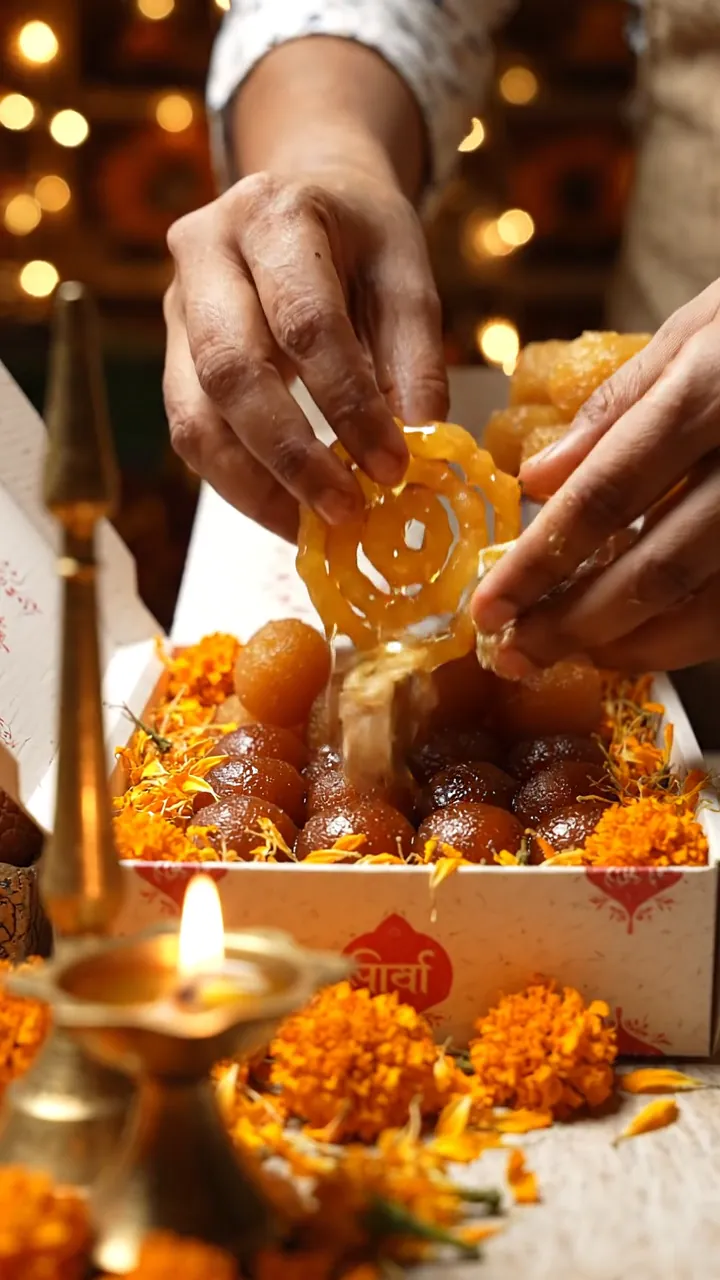
Food clips look best when hands are doing something, not when the food just sits there. The Diwali sweet shop counter prompt leans on that.
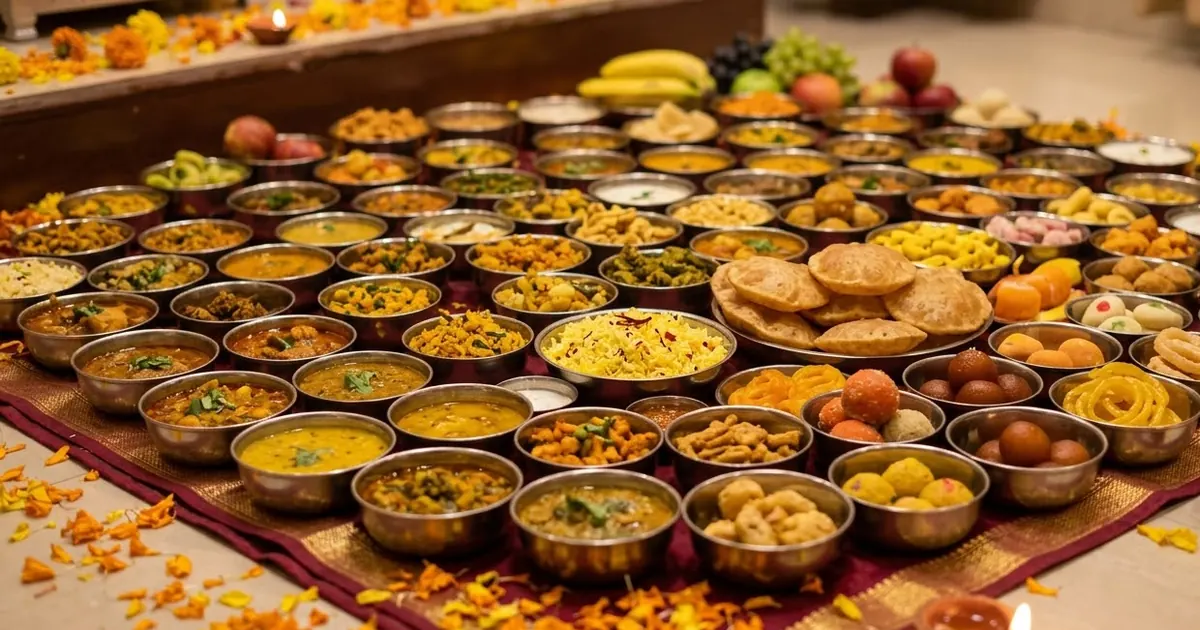
Warm vertical video. A traditional sweet-shop counter in [FESTIVAL WEEK, e.g. the week of Diwali]: hands in a plain cotton apron carefully arrange [SWEETS, e.g. golden laddoos, deep brown gulab jamuns, saffron-coloured jalebis and diamond-shaped barfi with silver leaf] into a decorated cardboard box lined with marigold petals, while strings of small warm lights glow in the soft-focus background and a brass lamp burns at the edge of the counter. Slow macro-style push-in, warm golden light, glossy sugar syrup shine, shallow depth of field. Festive, cosy, mouth-watering mood. Sound: soft shop murmur, tiny clinks of metal trays, gentle festive instrumental music.
List real sweets rather than a generic "Indian sweets". Laddoo, gulab jamun and jalebi each have a different colour and shine, and naming them gives the model something specific to render.
Rounding out a short reel
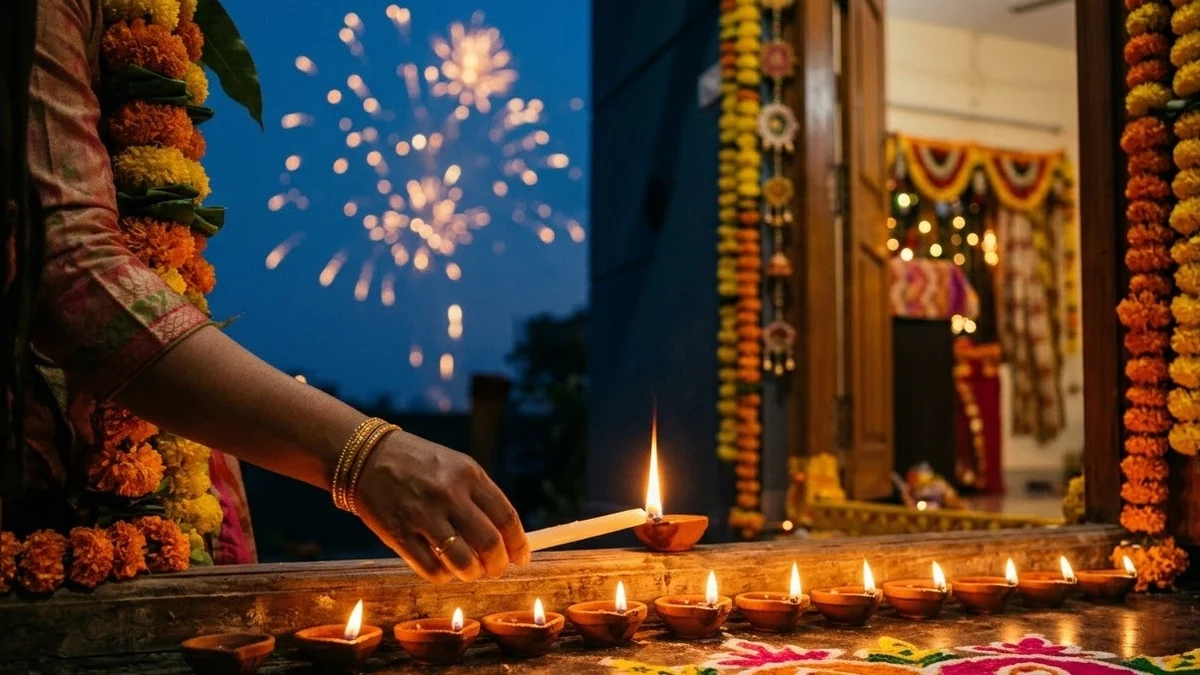
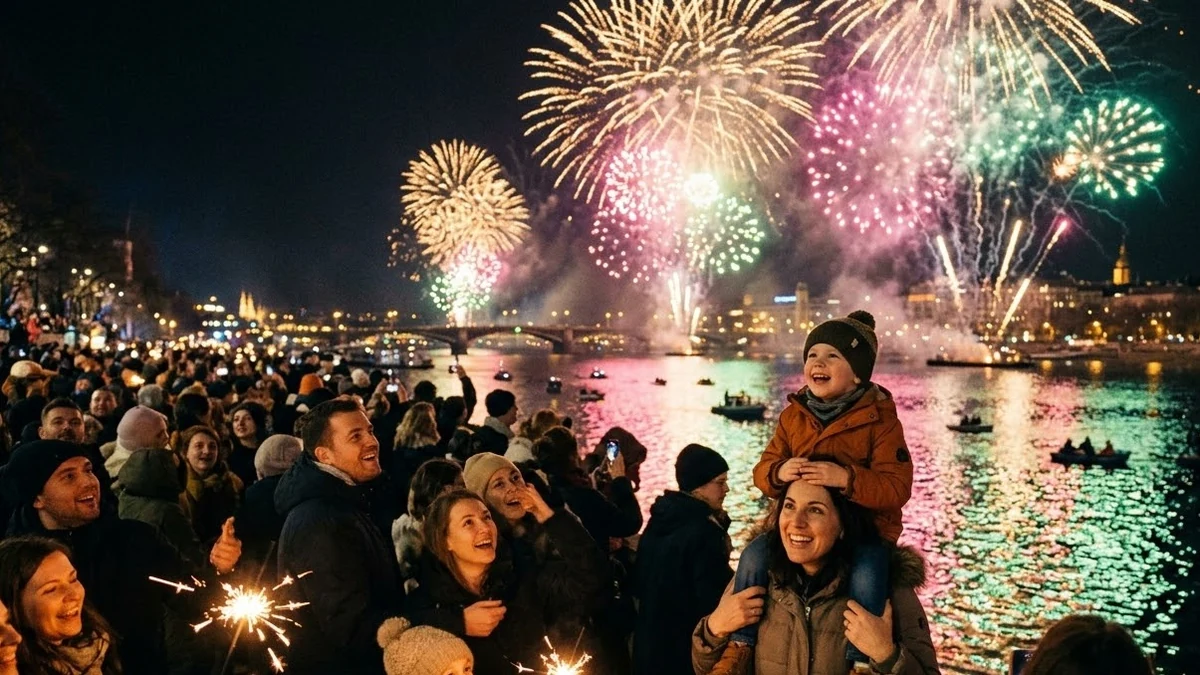
Three clips of ten seconds each is already a short film. If you want a wider lantern or firecracker shot to open or close with, the diya lighting prompt and the festival fireworks crowd prompt both work well as bookends, lit and shot in a more conventional, cinematic style that contrasts nicely with the VHS one.
Stitch the clips in whatever editor you already use. Keep the order loose at first, then put the sweet-shop shot either right after the diyas (it reads as "after the puja, the sweets came out") or at the very start, as an opening hook.
Where to go from here
For the still-photo side of Diwali, see Diwali AI photo prompts and retro Diwali family photo prompts. For a different take on a video greeting, Diwali wishes video prompts covers a more polished, card-style clip. All of the prompts above are free in the video generation prompts collection, and the prompt builder can rewrite any of them around your own family, sweets or rangoli pattern.
Quick checklist
- Match the camera style to the shot: handheld and grainy for diyas, fixed overhead for rangoli, macro push-in for sweets.
- Name real sweets and real colours instead of generic words.
- Ask for the diyas to light up at the end of a rangoli clip, not the start.
- Keep clips to around 8-10 seconds each, and cut between them rather than stretching one out.
- Add a plain sound description. It does as much as the picture to sell the mood.
Prompts to try
More prompts on this topic
- Festival Reel with slow-motion colourHiggsfield · Kling
- Animate a Diwali photo with glowing lightsHiggsfield · Kling
- Diwali balcony with a star lanternVeo
- Diwali offer banner for a shopGemini · ChatGPT · Midjourney
- Geometric rangoli designMidjourney · Gemini · ChatGPT
- Diwali family portraitGemini · ChatGPT
Comments
No comments yet. Be the first to share what worked for you.