AI prompts to name your business and pitch it in 30 seconds
Published
Short answerBrainstorm names in grouped batches rather than one long list, test your pitch out loud before you trust it, and design the logo last, once the name and pitch are settled. Doing it in that order saves you from falling for a name you'll later want to change.
Naming a business and pitching it well are two separate skills, and most people rush both. A name chosen in five minutes gets lived with for years. A pitch that opens with the company name instead of the problem it solves loses the listener before you've said anything useful. AI can move faster through both, as long as you give it structure instead of just asking it to "come up with something good".
1. Brainstorm names in groups, not one long list
A single list of 30 random names is hard to judge. Grouping them by type makes the differences between options actually visible:
Brainstorm 30 name ideas for [BUSINESS DESCRIPTION].

Audience: [WHO]
Feel: [e.g. trustworthy, playful, premium]
Avoid: [WORDS OR STYLES TO AVOID]

Group them: real words, invented words, two-word combos, and names with a local flavour for [REGION]. Keep names short (under 12 characters), easy to spell aloud and easy to say. Mark the best 5 and explain why.
This is the business name brainstorm prompt. Before you get attached to anything on the shortlist, check the domain, the social handles and a basic trademark search. A great name that's already taken everywhere is a name you don't actually have yet.
2. Write the pitch before the logo
It's tempting to go straight to visuals, but the pitch should come first: it's what tells you whether the name and the idea actually hold together once said out loud.
Write a 30-second spoken pitch for my business.

What we do: [ONE LINE]
Who for: [CUSTOMER]
Problem we solve: [PROBLEM]
Proof: [RESULT, CLIENT OR NUMBER]

Give 3 versions: casual networking event, investor, and a one-line intro for social media. Each should open with the problem, not the company name. Simple words a 12-year-old would understand.
This is the 30-second pitch prompt. Read all three versions out loud before you use any of them. If you run out of breath partway through a sentence, that sentence is too long; ask the model to shorten it rather than editing it live under pressure.
3. Design a simple logo
Once the name and the pitch feel settled, not before, move to the logo. Keep the brief tight: a simple symbol plus the name, not a crowded scene.
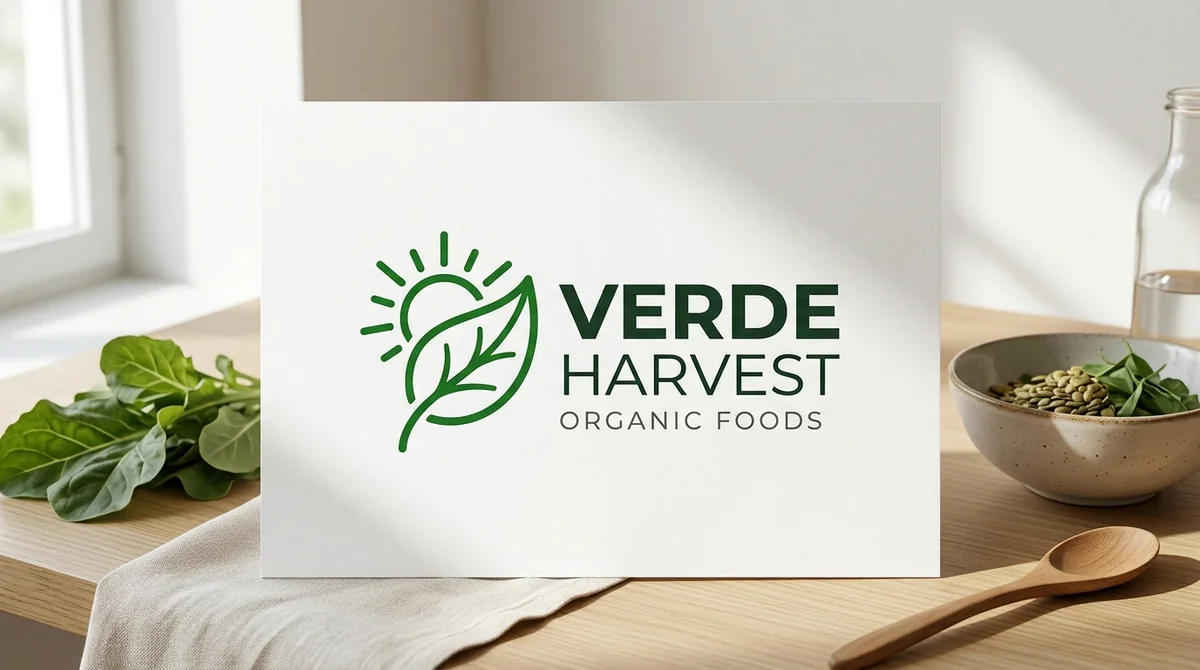
Design a minimal, modern logo for [BRAND NAME], a [WHAT THE BUSINESS DOES, e.g. homemade organic snacks brand].

Create a simple, memorable vector symbol that represents [IDEA, e.g. freshness and home cooking], next to the brand name in a clean, bold sans-serif font. Flat design, white background.
This is the minimal logo prompt. If the brand name has an unusual spelling, double-check the text in the result carefully. AI image tools still misspell text more often than they get it right, so Ideogram and ChatGPT tend to be the steadier choices when the words themselves matter.
4. Build the paperwork and the pitch deck cover
A letterhead and a pitch deck cover both lean on the same logo and colour choices, so do them once the logo is locked:
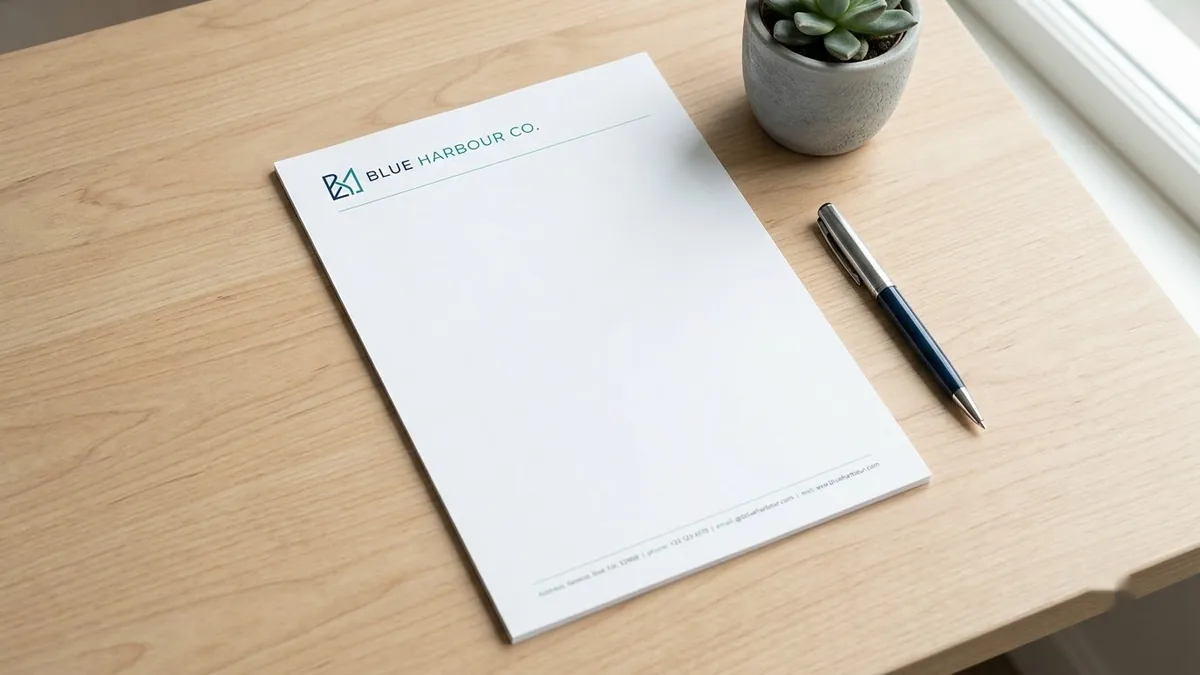
Design a modern business letterhead for "[COMPANY NAME]", a [INDUSTRY] company. A slim header with the logo at the top left, contact details in small clean type at the footer, a subtle [COLOUR] accent line, lots of white space, shown as a flat A4 page mockup with a few lines of placeholder text.
And for the first slide anyone will see in a pitch deck, the pitch deck cover prompt:
Pitch deck cover slide for "[COMPANY NAME]" with the tagline "[TAGLINE]", a striking abstract [COLOUR] gradient shape on the right, clean bold sans-serif title on the left, small logo placeholder and date at the bottom, modern startup design. --ar 16:9
Use the one-line social media version of your pitch from step 2 as the tagline here. It's already been tested for length and clarity, so it tends to work better than writing a new tagline from scratch.
Fixing common problems
All the names sound the same. Add a constraint that forces variety: "half should be under 7 letters" or "include at least 5 names that don't describe what we do literally."
The pitch sounds like a mission statement. Ask again to "open with a sentence a stranger could relate to, not a sentence about our company."
The logo text is misspelled. Try again with the brand name in quotes and ask the tool to "spell the name exactly as written, letter by letter," or switch to Ideogram for the text-heavy version.
The letterhead looks cluttered. Ask for "more white space, smaller header, remove any decorative elements not already listed" rather than describing a whole new layout.
Where to go from here
Once you've got a name and a pitch, the next page most people check is your profile. See AI prompts for building a side project for more on turning an early idea into something real. All the prompts above are free in the small business prompts collection, and the prompt builder can write a version for your own business.
Quick checklist
- Brainstorm names in grouped batches, not one flat list.
- Check the domain and social handles before you commit to a name.
- Write and say the pitch out loud before designing anything.
- Open the pitch with the problem, not the company name.
- Lock the name and pitch before touching the logo.
- Double-check spelling in any image with text on it.
Prompts to try



More prompts on this topic
- App dashboard UI mockup for a pitch deckChatGPT · Gemini · Midjourney
- Startup pitch deck outlineChatGPT · Gemini · Claude
Comments
No comments yet. Be the first to share what worked for you.