AI fashion lookbook prompts: build a full shoot from one outfit
Published
Short answerPick one outfit and one location, then ask for three different poses in the same prompt so the set actually matches. Describe how the fabric moves, not just what it looks like, for anything with motion.
A lookbook is a set, not a single photo. A brand page or an Instagram carousel needs the same outfit shown from a few angles or in a couple of poses, with a consistent location and light, so it reads as one shoot rather than three unrelated pictures. That's the part most people get wrong when they try to do this with AI: they generate one strong image, then struggle to get a second one that matches it.
Build the whole set in one prompt
The fix is to ask for several poses in the same request, rather than generating one image and hoping the next one matches. Naming the outfit and location once, then listing the poses, keeps the set consistent far better than three separate prompts ever will.
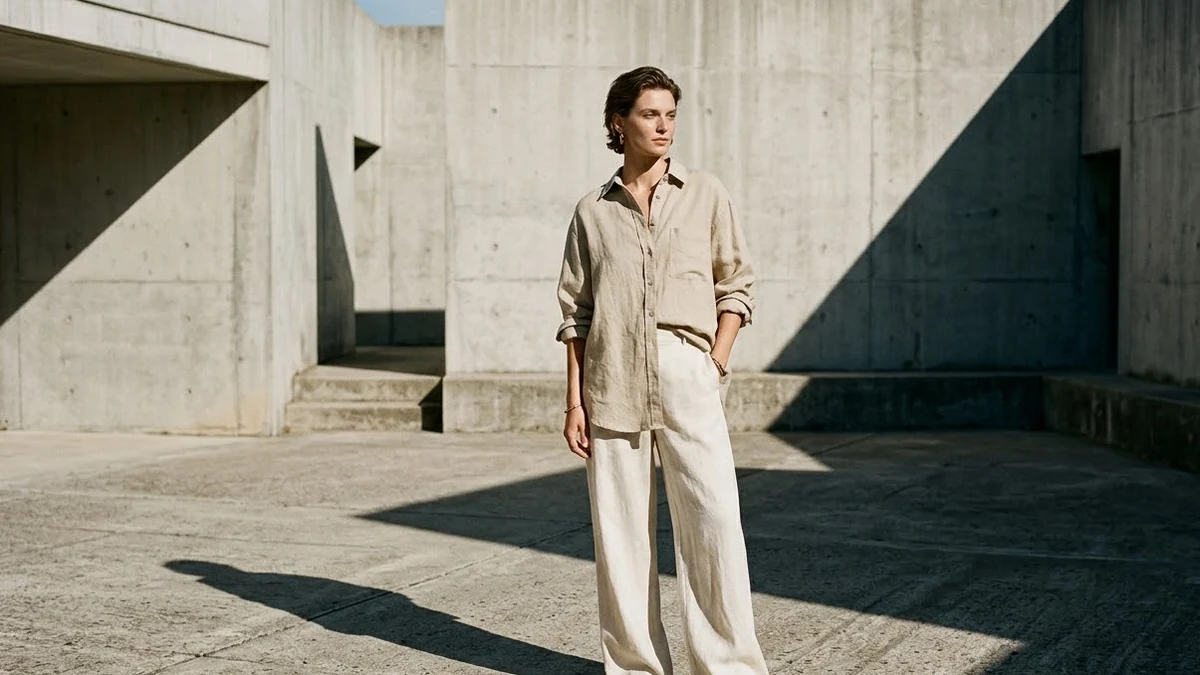
Fashion editorial photograph of a model wearing [OUTFIT, e.g. an oversized linen shirt and wide trousers in sand tones], standing in [LOCATION, e.g. a sunlit concrete courtyard], confident pose, long shadows, medium format film look, muted natural colours, sharp focus on fabric texture, magazine composition.
This is the fashion editorial lookbook prompt. Ask for it three times with a different pose named each time, such as "walking towards camera," "looking over the shoulder," and "seated on a low wall," while keeping the rest of the prompt identical. That's what actually makes a set feel like one shoot: the outfit, light and location stay fixed, and only the pose changes.
Describe the fabric, not just the outfit
Flat descriptions like "a silk dress" tell the model what the item is but nothing about how it should look on a body or in motion. Fashion photography lives in detail: how fabric catches light, whether it's structured or flowing, where it creases. Add a line about the material and how it sits.
| Flat | Specific |
|---|---|
| "a silk dress" | "a bias-cut silk slip dress that moves with the body, slight sheen" |
| "a suit" | "a sharply tailored wool suit, structured shoulders, crisp lapel" |
| "a linen shirt" | "an oversized linen shirt with visible texture and natural creasing" |
This matters even more once you add movement, because a flowing fabric and a structured one should behave completely differently on camera.
Turning a still into motion
If you want the lookbook to include a short clip, not just photos, the fabric and hair movement are what sell it as fashion rather than a slideshow. Describe how they move, not just that the model moves.
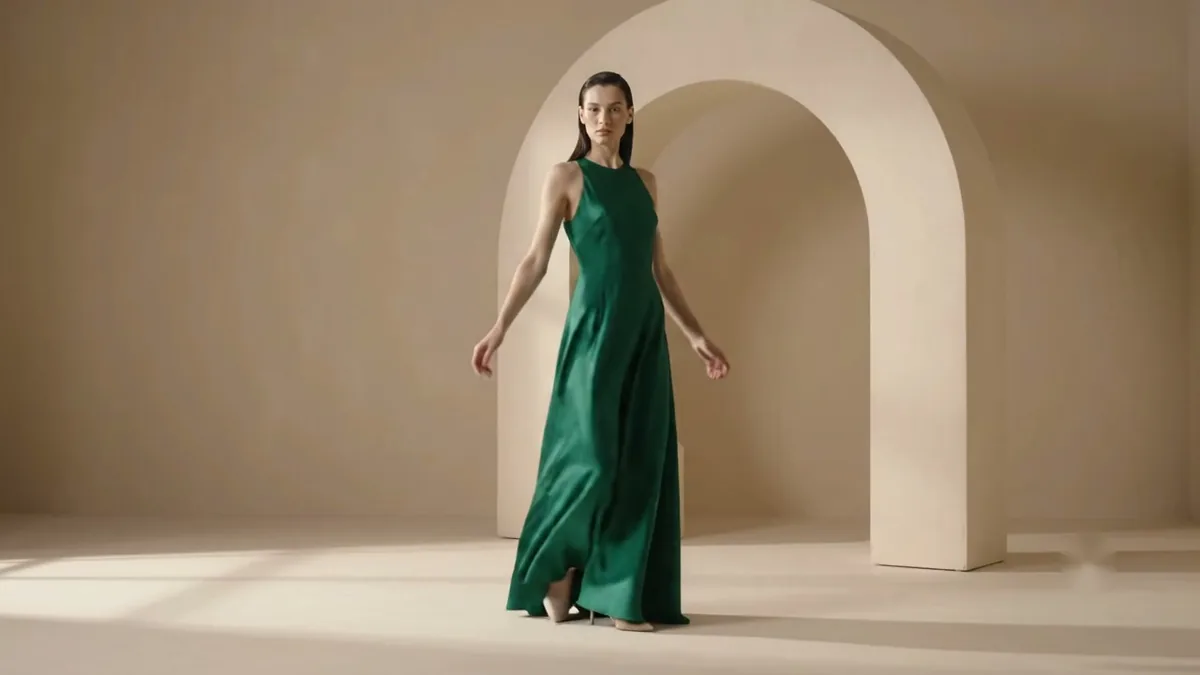
Animate this fashion photo: the model strikes three smooth poses, turns slightly, fabric of the [GARMENT] flowing, hair moving, soft wind. Keep the outfit, face and background exactly the same. Slow slider camera move, editorial lighting, 6 seconds.
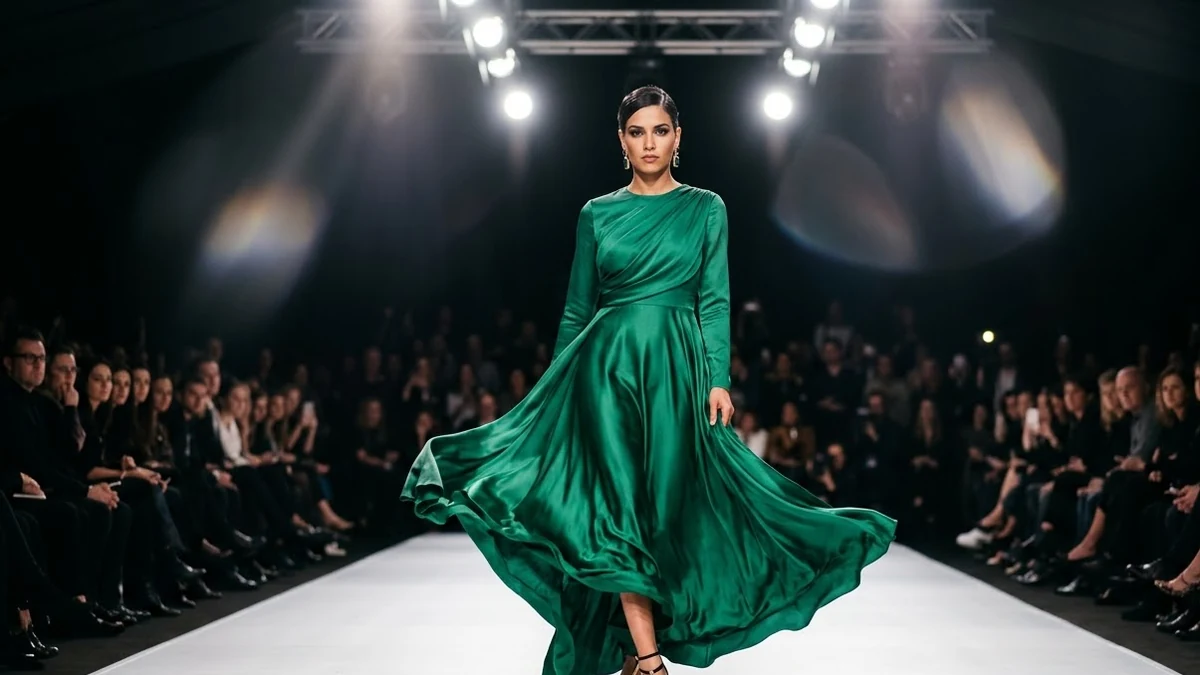
The fashion photo with model movement prompt animates a photo you already have, which keeps the face and outfit exact since it's working from a real image rather than generating a new scene. For a full runway-style clip instead of an animated photo, the fashion runway walk prompt builds the whole scene, spotlights, blurred audience and a tracking camera included:
A model walking down a minimalist runway wearing [OUTFIT, e.g. a flowing emerald silk gown], confident stride, fabric moving with each step, audience blurred in soft dark background, bright spotlights and lens flares, camera tracks backward at the model's pace, then switches to a close-up of the fabric detail. High-fashion mood.
Both prompts ask for fabric movement directly, "flowing," "moving with each step", rather than leaving it to chance. That's the single detail that separates a convincing fashion clip from a photo that just wobbles.
Using your own face in the shoot
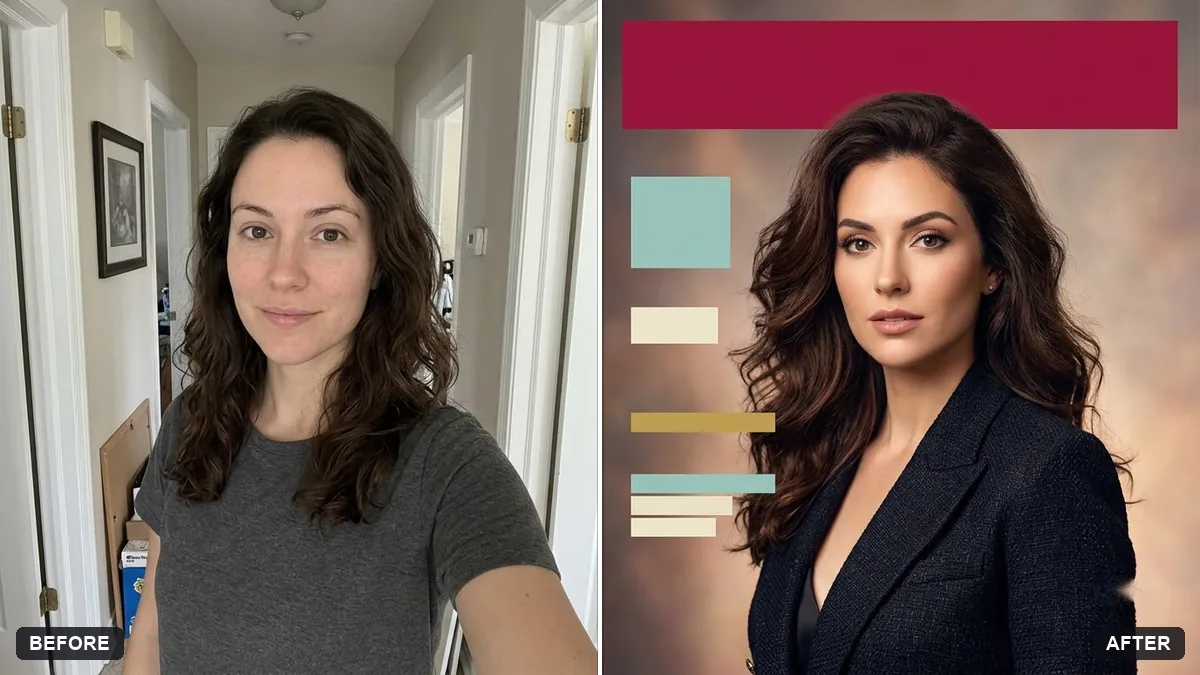
If the lookbook is of you rather than a generic model, start from a real photo and say so clearly, so the model edits your photo instead of generating a stranger who merely resembles you.
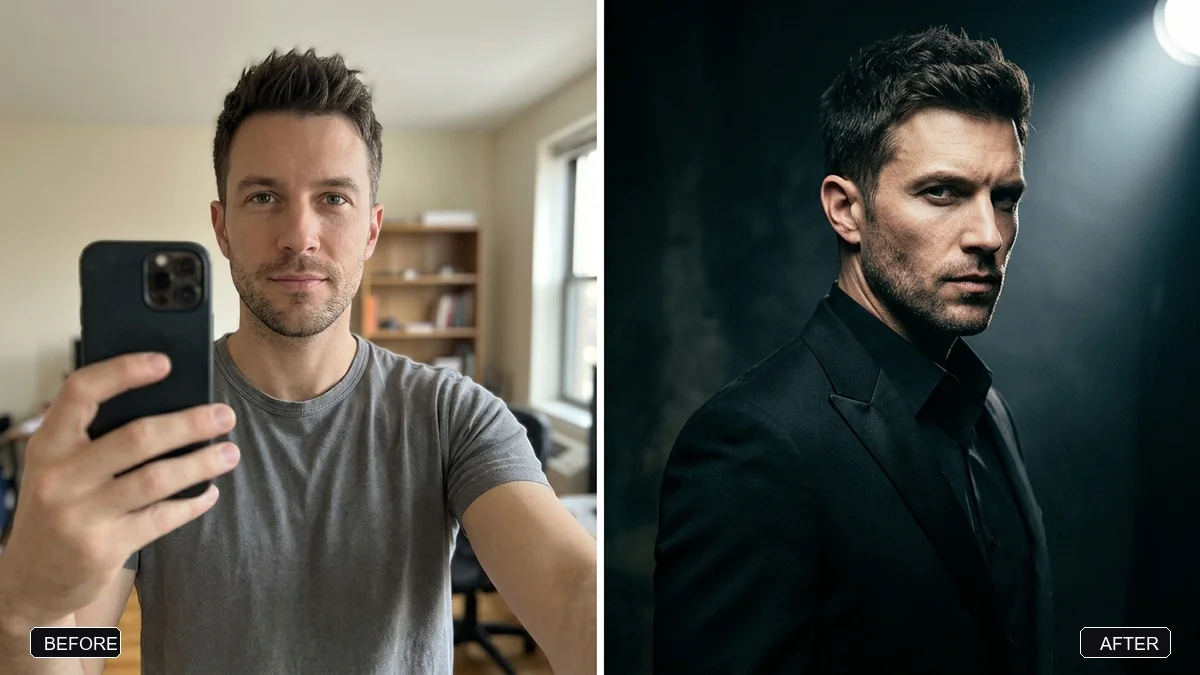
Transform this photo of me into a luxury fashion editorial portrait. Keep my face, facial features, skin tone, and hairstyle exactly the same.

Outfit: [OUTFIT, e.g. a black tailored suit / a satin evening gown]. Setting: [SETTING, e.g. a dark studio with a single hard spotlight].

Cinematic lighting with deep shadows, 85mm lens, shallow depth of field, rich contrast, subtle film grain, and a high-fashion magazine colour grade.
The cinematic editorial portrait prompt keeps that instruction at the very front, before any mention of outfit or lighting, which is deliberate: put the "keep my face exactly the same" line first, and repeat it if a result starts drifting after a few edits in the same session.
A cover shot to finish the set
Once you have a few shots from the same shoot, one of them usually works as a stand-alone cover. The magazine cover prompt takes any photo from the set and adds a masthead, a headline and cover lines around it, which makes a nice closing image for a carousel or a moodboard without any extra shoot.
Where to go from here
For portraits with a quieter, old-money mood instead of a full lookbook set, see AI luxury editorial photoshoot prompts. Browse more posing and styling ideas in cinematic portrait prompts, or use the prompt builder to fill in your own outfit and location across a whole set.
Quick checklist
- Name the outfit and location once, then ask for several poses in the same prompt.
- Describe the fabric: structured, flowing, sheen, texture, not just the garment name.
- For motion, say how the fabric and hair should move, not just that there is movement.
- Working from your own photo: say "keep my face exactly the same" first, before the styling.
- Pick one shot from the set to turn into a cover for the carousel or moodboard.
Prompts to try
More prompts on this topic
- Street style fashion portraitGemini · ChatGPT
- Behind-the-scenes of a photo shootVeo · Kling · Seedance
Comments
No comments yet. Be the first to share what worked for you.