In 1983 a Soviet warning satellite saw five missiles that were not there, and one officer doubted it
Published · Facts checked against the sources at the end
 Watch the reel on YouTube (opens in a new tab)
The short versionJust after midnight on 26 September 1983, the Soviet Union's satellite warning system reported a missile launch from the United States, then four more. Lieutenant Colonel Stanislav Petrov, the duty officer, judged it a false alarm. The cause was later traced to sunlight reflecting off high clouds. The incident stayed secret until 1998.
- 5missiles the warning system reported
- ~30 minflight time of a missile from the US to the USSR
- 25 daysbetween the shooting down of Flight 007 and the false alarm
- 1998the year the incident became public
What happened
In the first minutes of 26 September 1983, an alarm sounded at the Soviet Union's early-warning command centre at Serpukhov-15, near Moscow. The screen showed that a missile had been launched from the United States. Then came more. In all, the system reported five.
The officer on duty was Lieutenant Colonel Stanislav Petrov of the Soviet Air Defence Forces. His job was to pass the warning up the chain. He judged it a false alarm instead. There were no missiles.
The machine and the month
The system was called Oko, Russian for "eye". It used satellites in a long, looping orbit, which kept them over the American missile fields for hours at a time, to watch for the heat of a rocket engine. A missile fired from the United States takes about half an hour to arrive, so every minute the warning saved mattered.
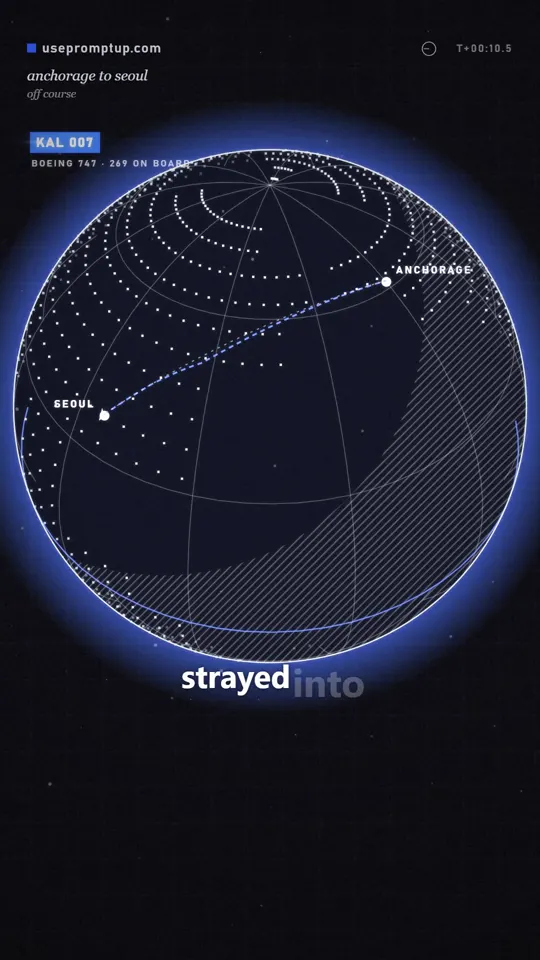
The timing made the alarm easier to believe. Three and a half weeks earlier, on 1 September, a Soviet fighter had shot down Korean Air Lines Flight 007, killing all 269 people on board. Soviet leader Yuri Andropov, a former head of the KGB, was seriously ill. And since 1981 the KGB had been running an operation to look for signs of a surprise American first strike. In that atmosphere, a machine saying "the attack has started" was not easy to dismiss.
Why Petrov doubted it
Petrov explained his thinking in later interviews:
- A real first strike, he reasoned, would involve far more than five missiles.
- Oko was new, and he did not fully trust it.
- The ground radar showed nothing.
The system itself reported the highest level of confidence. He still did not treat it as an attack. By his own account he was never completely sure he was right.
Accounts differ on exactly what he told his superiors and how. The sources agree that he treated the warning as a false alarm. This page does not claim more than that.
What caused the false alarm
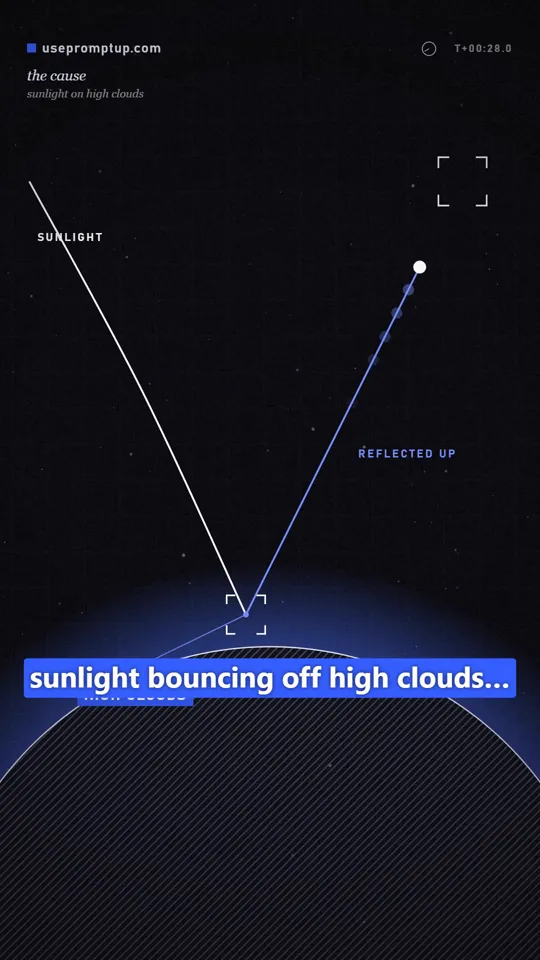
It was later traced to a rare combination of conditions: sunlight reflecting off high-altitude clouds over the missile fields, seen by the satellites from a particular point in their orbit. The sensors took the glare for rocket flames.
The reel showed this as a diagram. It is a good example of a general problem: a machine does not know what a missile is, only what a pattern looks like.
What happened to him
There was no medal. The incident was classified. By Petrov's own account, he was questioned and then reprimanded, in part for how he had recorded the night in the logbook. He left the army in 1984.
The story became public in 1998, when General Yuri Votintsev mentioned it in his memoirs. Petrov was honoured in New York in 2006 and received the Dresden Peace Prize in 2013. He died on 19 May 2017 aged 77. The wider world learned of his death in September 2017, after a friend called to wish him a happy birthday.
What the reel left out
A 41-second reel has to simplify. Here is the fuller picture:
- The reel says he "judged it a false alarm instead of reporting an attack". Sources disagree on whether he phoned his superiors or only reported a malfunction, so the long video says only that he treated it as a false alarm.
- His reasons are his own, given in interviews years later.
- The reprimand and the lack of a medal are his own account of events.
- Six weeks later NATO ran the Able Archer 83 exercise. Some Soviet officials feared it was cover for a real attack. That does not mean it "nearly started a war", which is a stronger claim than the sources support.
Why this still matters
Today software makes more and more decisions: what to flag, what to block, what to recommend. Petrov's night is the standard example of why a person who understands the context, and is allowed to doubt, is worth having in the loop. The lesson is not that machines are bad. It is that a confident answer from a machine can still be wrong.
Timeline
- 1 Sep 1983A Soviet fighter shoots down Korean Air Lines Flight 007. All 269 people on board die.
- 26 Sep 1983Just after midnight Moscow time, the Oko satellite system reports a launch from the United States, then more: five in all. Petrov, the duty officer at the Serpukhov-15 command centre, treats it as a false alarm.
- 7 to 11 Nov 1983NATO holds the Able Archer 83 exercise. Some Soviet officials fear it could be cover for a real attack.
- 1984Petrov leaves the army.
- 1998The incident becomes public through the memoir of General Yuri Votintsev.
- 2006 and 2013Petrov is honoured in New York (2006) and receives the Dresden Peace Prize (2013).
- 19 May 2017Petrov dies at 77. The news reaches the wider world in September 2017.
Dates and events are from the sources below. Where accounts differ, this page says so.
Go further with AI
Paste one of these into ChatGPT, Gemini or Claude. Replace the [BRACKETED] parts first. AI chatbots can get dates and numbers wrong, so check anything important against the sources below.
Explain the 1983 Soviet false alarm and Stanislav Petrov to a [10-year-old / high school student]. Use one everyday comparison, keep it under 150 words, and end with one question to check that I understood.
Quiz me on the 1983 Soviet nuclear false alarm. Ask 5 multiple-choice questions one at a time, wait for my answer each time, then tell me if I was right and why. If you are not sure of a fact, say so instead of guessing.
My team uses an automated system for [DESCRIBE THE DECISION, e.g. flagging payments, filtering applications]. Like Petrov, a person should be able to doubt a confident alert. List 3 situations where the system could be confidently wrong and what a human reviewer should check before acting.
Frequently asked questions
Who was Stanislav Petrov?
A lieutenant colonel in the Soviet Air Defence Forces who was the duty officer at the Oko early-warning command centre near Moscow on 26 September 1983. He is remembered for treating a satellite warning of five incoming missiles as a false alarm.
What caused the 1983 false alarm?
A later investigation traced it to sunlight reflecting off high-altitude clouds, seen by the Oko satellites from a particular position in their orbit. The sensors read the glare as the flames of rocket launches.
Did Petrov really save the world?
He is often described that way, and the false alarm was real and serious. What the sources support is narrower: he treated a warning as false when the system said it was real, and it was false. Nobody can say for certain what would have happened if he had reported an attack.
Sources
- Wikipedia: 1983 Soviet nuclear false alarm incident
- Wikipedia: Stanislav Petrov
- Arms Control Association: The Man Who "Saved the World" Dies at 77 (October 2017)
- Wikipedia: Able Archer 83
- Wikipedia: Korean Air Lines Flight 007
Spotted a mistake? Tell us and we will fix it.