The surreal AI video trend: make the impossible look real
Published
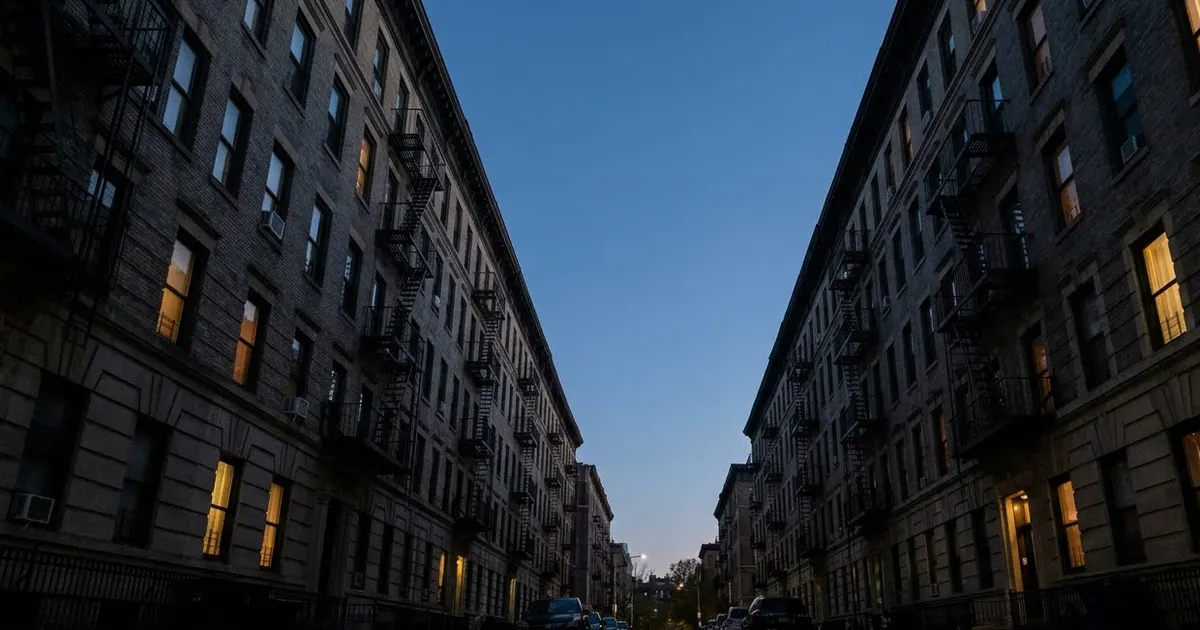
Short answerThe viral AI video trend right now isn't fantasy art, it's ordinary places with one impossible thing added, shot like a shaky phone video. The trick is naming the camera like a real phone, not a cinema camera, and keeping everything except the one impossible thing completely normal.
A lot of the AI video clips going viral right now aren't trying to look like a movie. They're trying to look like something a stranger filmed on their phone and posted because they couldn't believe what they were seeing: a whale drifting above a city street, a waterfall pouring through a train carriage, a goldfish the size of a building gliding past someone's window.
Roundups of 2026's most-shared AI video styles keep landing on the same idea: surreal, physically impossible scenes, filmed as if they were normal security-camera or phone footage, are one of the biggest categories on TikTok and YouTube right now. Google's own Veo model had a similar moment in 2025, when clips styled as ordinary security-camera footage racked up well over 100 million views in a single week, which is part of why "shot like real footage" has stuck around as the format that works.
The appeal is the contrast. One thing is completely impossible. Everything else, the lighting, the camera shake, the mundane setting, is boringly real. That contrast is also exactly what makes these prompts tricky to write, because the realism carries more weight than the impossible part.
The one rule that makes or breaks these
Every prompt below follows the same structure: an ordinary place, filmed like a phone video, with exactly one impossible thing added. If you remember nothing else, remember this: describe the camera like a person holding a phone, not like a film crew. "Handheld with a slight shake" does more work than any amount of detail about the impossible subject.
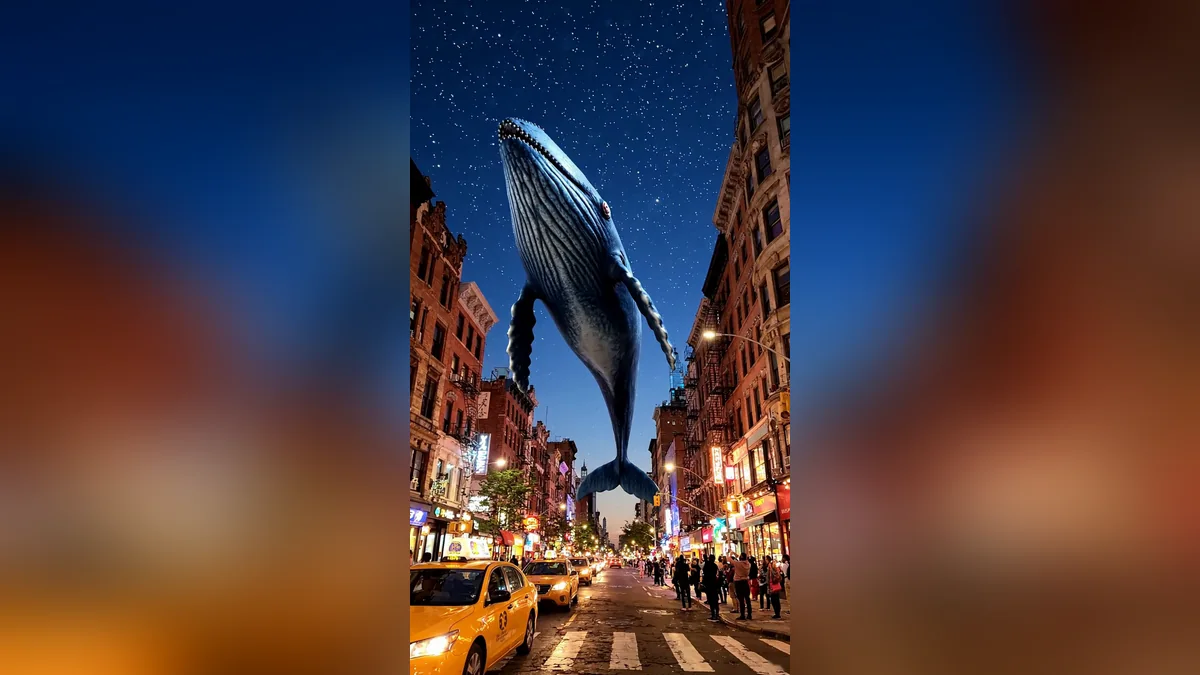
A whale over the street
The whale over a city street prompt:
Vertical 9:16, 8 seconds. Shot on a phone, handheld with a slight shake: a huge [ANIMAL, e.g. whale] slowly swims through the air above a busy [PLACE, e.g. city street] at dusk, its shadow passing over parked cars and shopfronts, small distant people looking up. Realistic lighting and scale, no close faces. Sound: city traffic, a deep low whale call echoing between buildings.
Keep people small and far from the camera. Close-up AI faces are where a shot like this usually falls apart, so the prompt pushes them into the background on purpose.
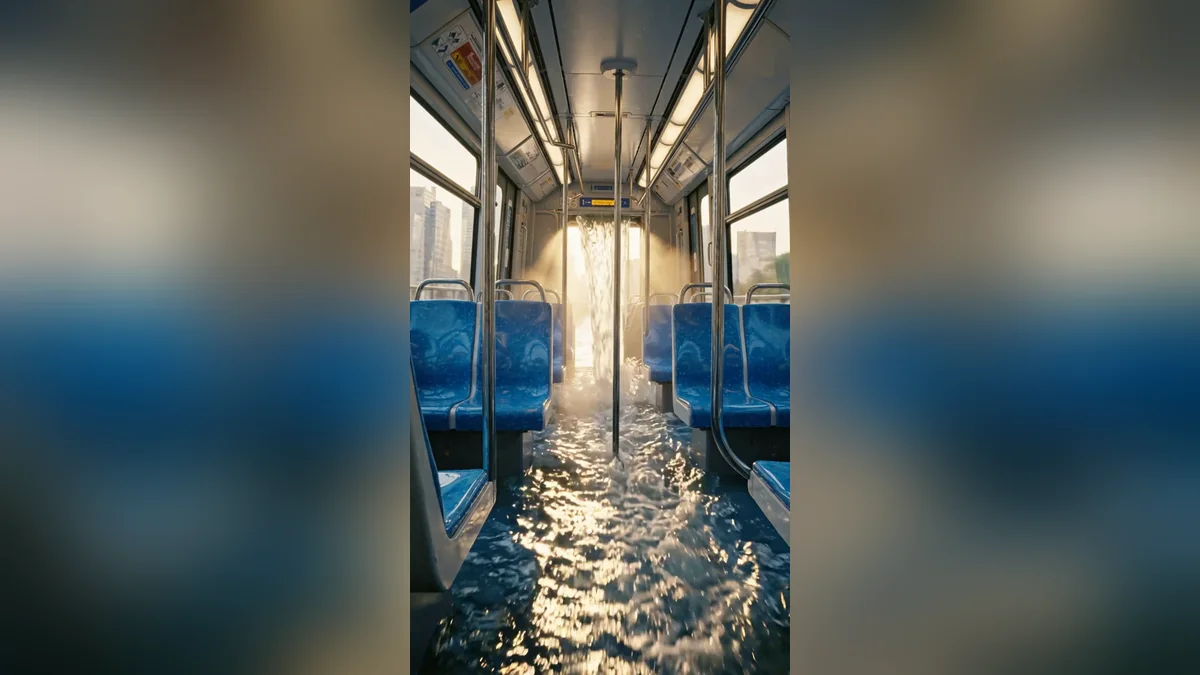
A waterfall inside a train
The waterfall in a metro train prompt swaps the city for an enclosed space, which changes the challenge: water physics instead of scale.
Vertical 9:16, 8 seconds. A phone video inside a moving [VEHICLE, e.g. metro carriage]: a calm waterfall pours out of the sliding doors and flows down the aisle between empty seats like a river, sunlight through the windows, mist in the air, water splashing softly around the poles. Steady camera, realistic water physics, nobody in the carriage. Sound: rushing water and a train rumble.
Say "nobody in the carriage." Crowds of AI people are where glitches tend to show up first, and an empty space keeps the water as the only thing you're asking the model to get right.
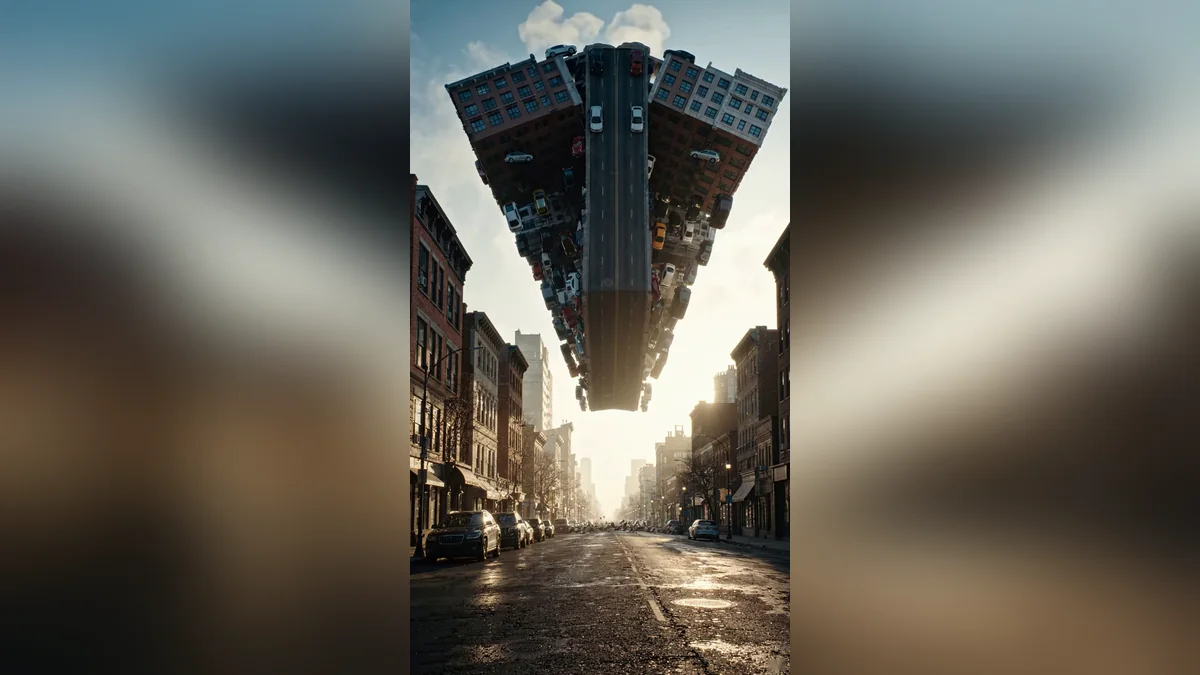
A city street folding like a book
The city folding up prompt is the most architectural of the set, and the hardest to get clean:
Vertical 9:16, 8 seconds. A quiet [PLACE, e.g. city street] at dawn: the road and the buildings on both sides slowly rise and fold upward in front of the camera like a page of a book, until the street forms a tunnel of buildings overhead, with cars staying stuck to the road surface. Static wide shot at street level, realistic materials and light, soft morning haze. Sound: a deep low rumble, distant birds.
This one varies a lot between generations. Make two or three and keep the cleanest, rather than trying to perfect a single attempt through re-prompting.
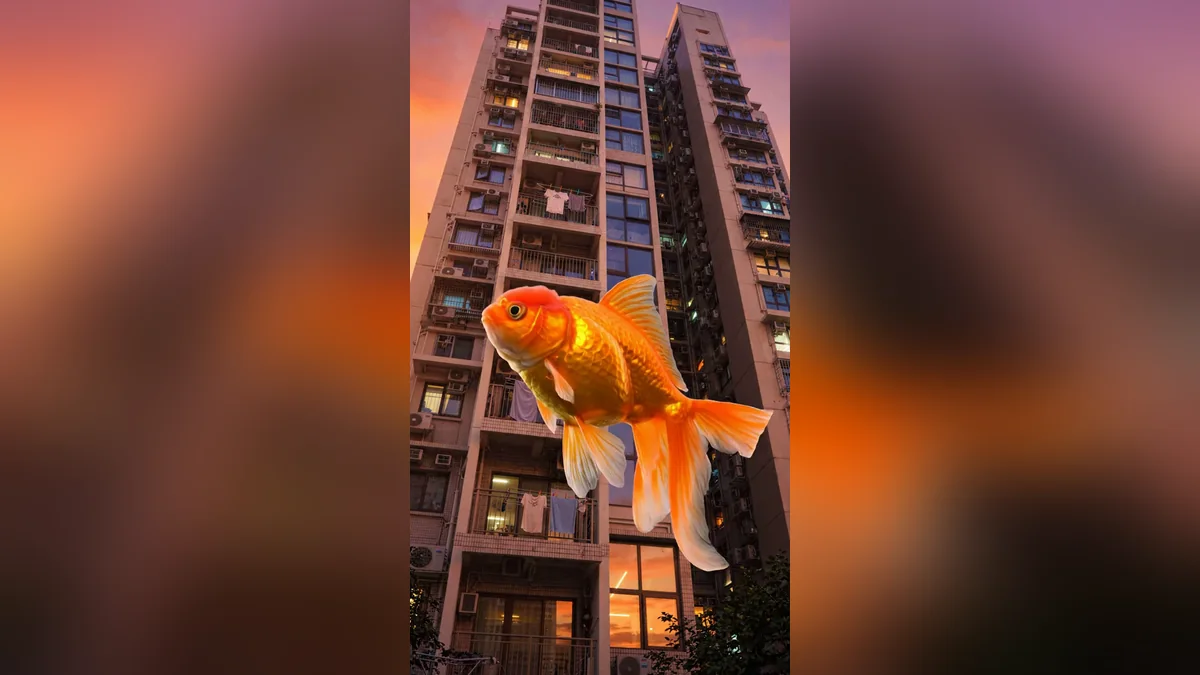
A giant goldfish past apartment windows
The giant goldfish prompt works at night or dusk specifically because window light gives the model something real to anchor the reflections to:
Vertical 9:16, 8 seconds. Shot from the street looking up at an apartment block at sunset: a gigantic [ANIMAL, e.g. orange goldfish] drifts slowly past rows of lit windows, its fins rippling like silk, reflections sliding across the glass, laundry on a balcony swaying in its wake. Realistic scale and lighting, no people visible. Sound: soft city evening, a gentle underwater-like whoosh.
"No people visible" is doing real work here too. It stops strange half-formed faces from appearing in the lit windows, which is a common failure mode once you ask for a building full of apartments.
Making your own version
Once you've tried a couple of these, the pattern is easy to copy for a different impossible subject:
- Pick one ordinary, specific place.
- Pick one impossible thing, and only one.
- Describe the camera the way a phone would move: handheld, static, or a slow dolly, never a sweeping cinema move.
- Say what stays real: the scale of ordinary objects, the lighting, the absence of close faces.
- Add a plain sound description. It sells the realism almost as much as the picture does.
Where to go from here
For the Higgsfield preset-style effects that work the same way but transform a person instead of a scene, see Higgsfield viral video effect prompts. For the basics of turning a photo into motion, see animating a photo into AI video. These prompts and more are in the video generation prompts collection, and the prompt builder can help you swap in your own place and subject.
Quick checklist
- Change exactly one thing. Everything else stays ordinary.
- Describe the camera like a phone, not a film crew.
- Keep people small, distant, or out of frame entirely.
- Generate a few takes for anything involving a changing environment, and keep the cleanest.
- Add a plain sound description to sell the realism.

Comments
No comments yet. Be the first to share what worked for you.