Blog
AI prompts for studying: study plans, quizzes and flashcards
Short answer: Use AI as a study partner, not a shortcut. Give it your syllabus and notes, let it quiz you and plan your days, and check its facts against your textbook, because it can be confidently wrong.
Published
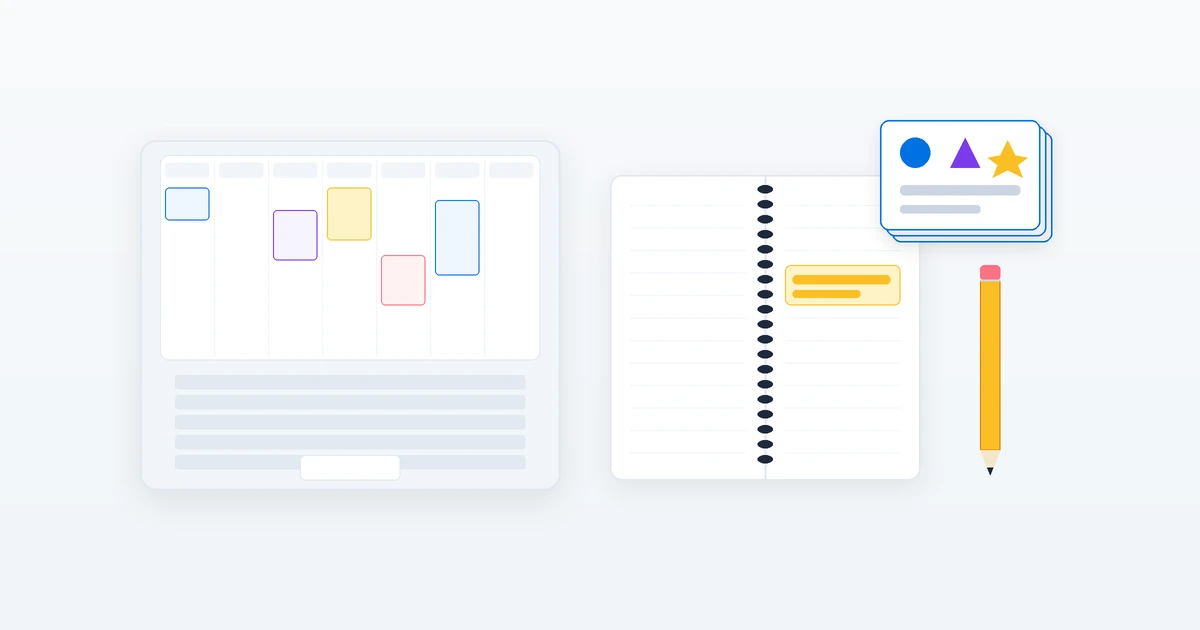
AI can help you study, and it can also help you avoid studying. The difference is how you use it. Copying an AI's answer into your notes teaches you very little. Using it to plan, to quiz you and to explain things until they make sense can make your study time count.
This guide shows how to use AI for studying, with prompts you can copy from the library.
Ground rules
- Give it your material. Your syllabus, your class notes, your textbook chapter. Answers based on your material match your course better.
- Check facts. AI can be wrong about dates, formulas and definitions. Compare anything important with your textbook or teacher.
- Do the thinking yourself. Answer the questions before you look at the explanation.
- Follow your school's rules. Learning with AI is one thing. Submitting AI-written work as your own is another, and many schools don't allow it.
1. Plan the days before an exam
The exam study plan prompt asks for the exam, the days left, your syllabus, your weak areas and your daily hours. It returns a day-by-day table with harder topics early, revision days, mock tests and a lighter day each week.
Two habits make the plan useful:
- Be honest about your hours. A plan for 8 hours a day is useless if you can study 3.
- Re-plan when you fall behind. Ask it to "re-plan from today" rather than dropping the plan.
2. Learn by being quizzed
Reading an explanation feels productive, but answering questions shows you what you actually know. The learn by quiz prompt teaches a topic through questions instead of lectures. It asks one question at a time, starts easy, explains each answer with an everyday example, and finishes with a summary of what you still need to revise.
Answer in your own words, even if you're unsure. Wrong answers are useful, because they show exactly what to fix.
3. Get an explanation that makes sense
Some ideas don't click the first time. Use the explain like I'm 15 prompt, which asks for one analogy, a step-by-step example, a "common mistake" section and three test questions with hidden answers.
If the analogy doesn't help, say "try a different analogy", or say what you already understand so it can start from there.
4. Turn your notes into flashcards
The flashcards prompt takes your notes and makes 20 question-and-answer cards, including "why" and "compare" questions and a few tricky multiple-choice questions.
- Paste the table into a flashcard app such as Anki or Quizlet to use spaced repetition.
- Check each card against your notes. A wrong card is worse than none.
- Try writing a few cards yourself. Making them helps you learn.
5. Make a one-page revision sheet
Near the exam, use the revision sheet prompt. It condenses your notes into key definitions, formulas or dates, a table of ideas, likely exam questions and a mnemonic, and uses only your notes.
A good way to use it: print it, study it, then rewrite it from memory the next day. Retrieving it yourself is where the learning happens.
6. Beat procrastination
If starting is the problem, the study motivation coach prompt asks three short questions about what is stopping you, then gives you a tiny first step of under 10 minutes and a 2-hour plan with breaks. AI can't do the studying for you, but it can help you begin.
What AI can't do for your studies
- Know your exam. It doesn't have your teacher's slides or past papers unless you paste them in.
- Guarantee accuracy. Check facts and calculations.
- Replace practice. For subjects like maths and coding, you have to work problems yourself.
A simple weekly routine
- Sunday: make or refresh your plan.
- Study days: get quizzed on one topic, then write notes in your own words.
- Midweek: turn notes into flashcards.
- Weekend: make a revision sheet and rewrite it from memory.
For more on writing prompts that work, see how to write a good AI prompt, or browse the chat and writing prompts.