AI prompts for decluttering and selling your stuff online
Published

Short answerPlan the decluttering in small daily steps so it doesn't stall after day two, then let AI write the listing title and description once you know what's actually going. A better photo and a clearer title do more for a sale than a longer description.
Most decluttering attempts fail for the same reason: the plan is too big ("sort out the whole house this weekend") and the selling part gets skipped because writing listings is boring. AI is good at both halves of this problem: breaking the job into small enough pieces that you actually finish, and turning a pile of stuff into listings and photos that get a buyer's attention.
Start with a plan you'll actually keep to
A decluttering plan that asks for three hours a day dies on day two. The 30-day declutter plan prompt asks for a realistic daily time budget instead:
Build a 30-day decluttering plan for my [HOME TYPE].

Rooms: [ROOMS]
Time per day: [MINUTES]
What overwhelms me: [PROBLEM AREAS]

Give a daily task of 15 to 30 minutes, rules for deciding what to keep, sell, donate or bin, tips for sentimental items and a way to stop clutter coming back.
Be honest about the minutes. Fifteen real minutes a day for a month clears more than three imagined hours that never happen. The "what overwhelms me" field is worth filling in properly too: naming the actual problem (paperwork, kids' clothes, a garage you can't walk through) gets you a plan aimed at your real sticking point instead of a generic room-by-room list.
Decide what's worth selling as you go
As the plan surfaces things to sell, keep a running note of what they are and roughly what they're worth, rather than trying to list everything at the end in one go. Selling a few things a week, listed well, usually beats a huge batch listed badly because you're tired of the whole project by week three.
Write a listing that actually sells
A rushed listing title is the single biggest reason a decent item sits unsold. The marketplace listing prompt is built for this:
Write a listing for an online marketplace.

Product: [PRODUCT]
Materials and size: [DETAILS]
Who it is for: [BUYER]
Made or shipped from: [LOCATION]
Care and shipping notes: [NOTES]

Give me 5 title options under 140 characters, a description with the benefits first, a bulleted details section, and 13 search tags of one to three words.
Two things make the difference here:
- Put your strongest keyword in the first five words of the title. Most marketplace search ranks heavily on the title, and buyers scan titles, not descriptions.
- Lead the description with the benefit, not the specs. "Keeps a room warm in winter without the electricity bill" sells a heater better than "1500W ceramic element" does, even though both are true.
Get a few title options from the prompt and pick the one that reads like something you'd actually click, not just the most descriptive one.
A photo that looks like a real listing, not a snapshot
A phone photo on a messy carpet undersells almost anything. If you don't want to set up a proper shot, the product-in-hand lifestyle prompt gives a small item a cleaner setting without staging anything yourself:
Place this product in a natural hand for a lifestyle photo. Keep the product's shape, colour and label exactly the same.

Setting: [e.g. sunlit cafe table / bathroom shelf / outdoor picnic]. Soft natural light, shallow depth of field, realistic hand with natural grip. Leave space at the top for text.
Check the item itself carefully once it's generated. AI image tools can quietly warp small text on a label, which matters if the listing needs to show the item accurately. For anything with print or a brand name, keep at least one unedited photo in the listing alongside the improved one.
A flyer if you're doing a garage sale
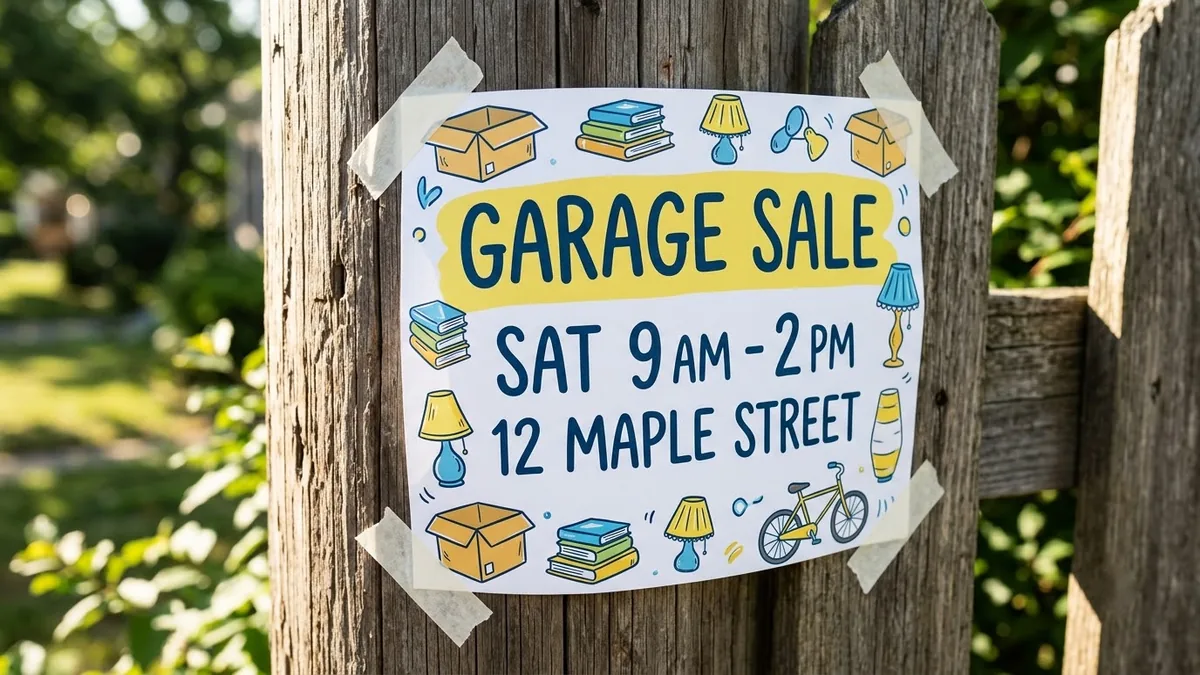
For a straightforward garage or yard sale rather than individual online listings, the garage sale flyer prompt makes something you can print or post to a local group:
Friendly garage sale flyer. Bright hand-drawn boxes, lamps, books and bicycles around a bold headline "GARAGE SALE", details "[DATE]", "[TIME]", "[ADDRESS]", a cheerful yellow and blue palette, playful lettering, big readable text, fun neighbourhood feel.
Put the address and a note about which direction to come from near the top. Most people who stop for a garage sale do it because they drove past the sign, not because they planned to come, so the flyer needs to work for someone glancing at it for two seconds.
Keep the loop going
The plan surfaces items, the listing prompt gets them sold, and the money or space you free up is what makes the next day's 20 minutes feel worth doing. Decluttering projects that stall usually stall because the "sell" half never happened, so the house fills back up with bags of things nobody got round to listing.
Where to go from here
If you're decluttering because you're about to move house, our guide to renting and moving house covers the viewing questions, repair requests and moving checklist that come next. The small business prompts collection has more prompts for selling and marketing, and the prompt builder can adapt any of these to your own stuff.
Quick checklist
- Set a daily time budget you'll actually keep to, not an ambitious one.
- Name your real problem area so the plan targets it, not a generic list.
- Put your best keyword in the first five words of the listing title.
- Lead the description with the benefit, then the details.
- Keep one unedited photo alongside any AI-improved one, especially if there's text on the item.
Prompts to try



More prompts on this topic
- Property listing flyerIdeogram · ChatGPT · Gemini
- Write a product description that sellsChatGPT · Gemini · Claude



Comments
No comments yet. Be the first to share what worked for you.