AI cover letter prompts that don't sound like AI: write one that gets read
Published

Short answerGive the AI the job ad, your real achievements and one reason you want this company, then ask for a short letter in your own voice with no clichés. Edit the first line yourself and read it aloud before you send it.
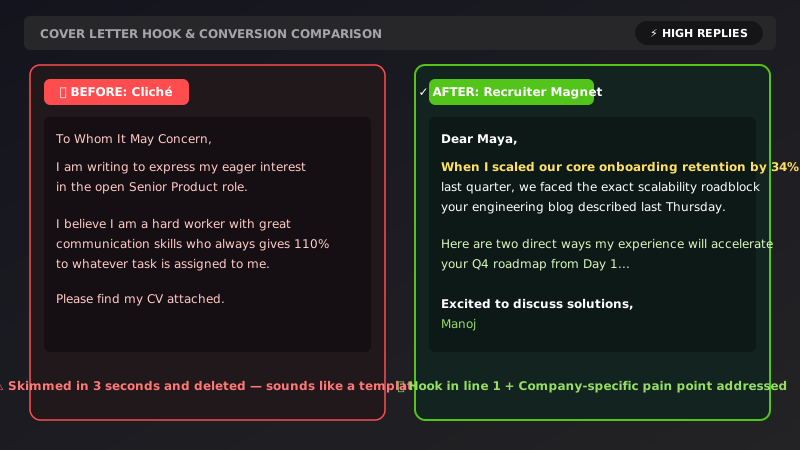
Hiring managers in the US and UK read a lot of cover letters, and the AI-written ones are easy to spot. They open with "I am writing to express my keen interest", use the same three adjectives and could be sent to any company. The fix is not to avoid AI. It is to give it the things only you know, and to tell it what to leave out.
(A quick note on words: in the US a "resume" is the standard document, and in the UK it is usually called a "CV". The cover letter works the same in both, and the prompts below work for either.)
1. Start with the job ad, not the template
Paste the job description into your AI tool before you write anything. The job post keyword match prompt pulls out the skills and phrases the employer cares about, so your letter answers what they asked for instead of what you assume they want.
2. The tailored cover letter prompt
Use the tailored cover letter prompt with your real details:
Write a cover letter for the role below. Keep it under 250 words and in plain, warm English.

Job ad: [PASTE THE JOB DESCRIPTION]
My background: [2-3 LINES]
Two achievements with numbers: [ACHIEVEMENTS]
Why this company: [ONE SPECIFIC REASON]

Rules: no "I am writing to express", no "passionate", no "team player". Start with something specific about the company or the role. End with one clear sentence about what I would do in the first 90 days.
The "rules" line is doing most of the work. Telling the AI which phrases to avoid removes the tone people notice first.
One specific detail about the company beats three general compliments. "I use your app every morning" is worth more than "I admire your innovative culture".
3. Fix the tone before you send it
If a draft still sounds stiff, paste it back with this:
Rewrite this cover letter so it sounds like a confident person talking, not a press release. Keep every fact. Shorten any sentence over 25 words. Replace vague words (dynamic, results-driven, passionate) with a concrete example from my background.
Then read the result out loud. Anywhere you stumble, change the wording until you would say it that way to a person.
4. Match it to your resume
A cover letter and a resume should tell the same story. The resume summary prompt writes a three-line summary you can echo in the letter's opening, so the two documents back each other up. If you need a resume or CV first, the free Resume Builder makes a clean one-page PDF in your browser without an account.
5. Questions that make you look prepared
Many applications ask whether you have questions at the end. Use the questions to ask the interviewer prompt to get five that fit the role instead of "What's the culture like?".
6. If you hear nothing back
A polite follow-up one to two weeks after applying is normal. The follow-up prompt writes a short message that restates your interest and adds one new piece of value, without sounding impatient.
Where to go from here
For the full set of job-search prompts, see AI prompts for your job search and the job search prompt collection. To prepare for the next stage, read our guide to AI prompts for job interviews. Applying to college instead of a job? See AI prompts for college essays and UCAS statements.
Quick checklist
- Paste the job ad first and pull out the skills it asks for.
- Give the AI two real achievements with numbers.
- Ban the clichés in your prompt: "passionate", "team player", "I am writing to express".
- Open with something specific about the company.
- Keep it to one page, read it aloud and edit the first line yourself.
Prompts to try
 Tailored cover letter that gets interviewsChatGPT · Gemini · Claude
 Write a strong resume summaryChatGPT · Gemini · Claude
Match your resume to a job postChatGPT · Gemini · Claude
Write a strong resume summaryChatGPT · Gemini · Claude
Match your resume to a job postChatGPT · Gemini · Claude
 Smart questions to ask the interviewerChatGPT · Gemini · Claude
 Follow up when someone has not repliedChatGPT · Gemini · Claude

Comments
No comments yet. Be the first to share what worked for you.